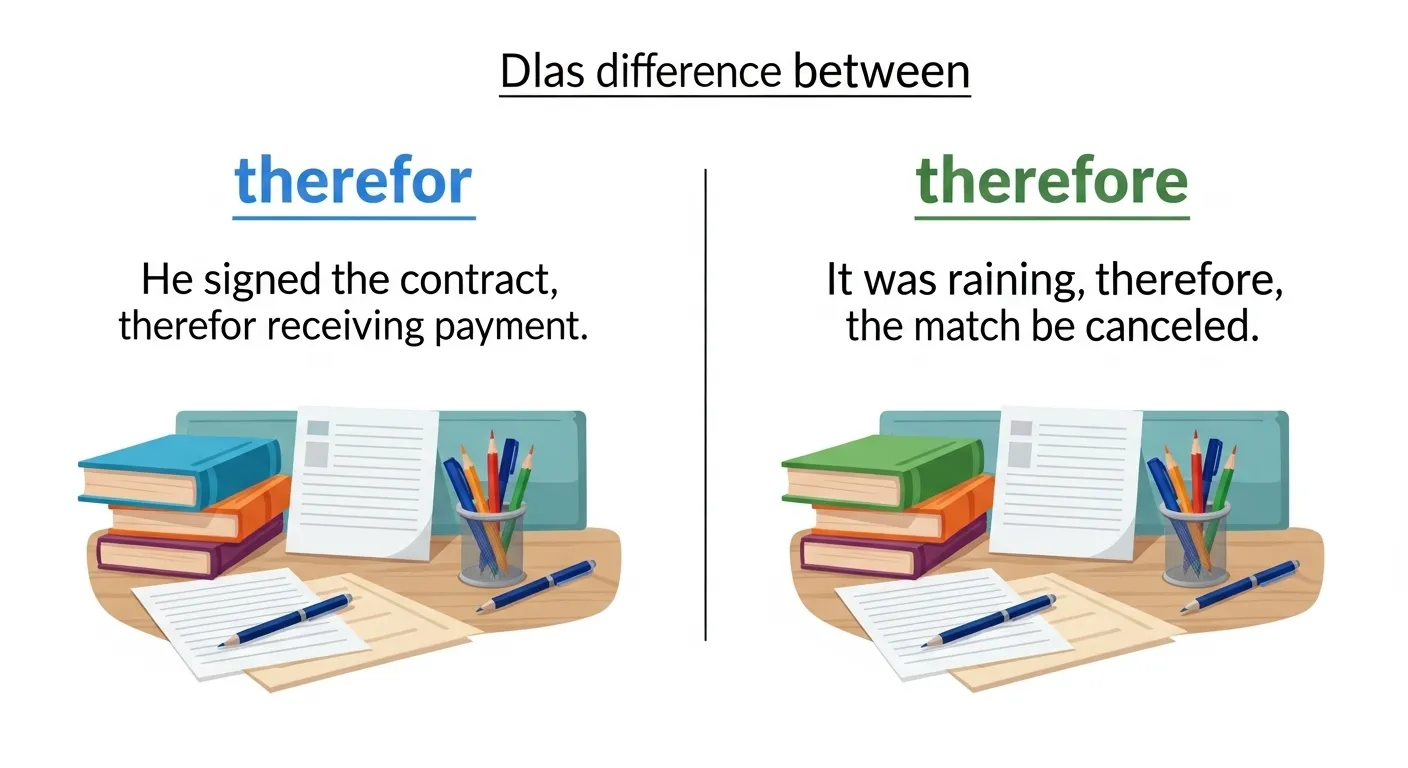
Many English learners and writers often search for “therefor or therefore” because these words sound alike but have different meanings.
Choosing the wrong spelling can make sentences confusing or grammatically incorrect. Are you trying to show cause and effect, or are you referring to something given or paid for? This confusion is common in essays, emails, social media posts, and professional writing.
In this article, we will give you a quick and clear answer, explain the history behind both words, compare UK and US spelling, highlight common mistakes, provide examples, and offer professional advice on which spelling to use.
By the end, you will confidently know when to use therefore and when therefor might appear (rarely).
Therefor or Therefore – Quick Answer
- Therefore – This is the correct and widely used word when showing cause and effect.
Example: I missed the bus; therefore, I was late for work. - Therefor – This is an archaic or legal term meaning “for that” or “for it.” It is rarely used in modern English except in legal documents.
Example: The payment was made therefor.
✅ Quick Tip: In almost all everyday writing, use therefore.
The Origin of Therefor and Therefore
- Therefore comes from Middle English “therfore”, a combination of “there” + “for,” used to show consequence. Over centuries, it became standardized in general English writing.
- Therefor also originates from the same roots but was historically used in legal and formal contexts, meaning “for that” or “for this purpose.” Its usage has dwindled outside contracts, law, or formal agreements.
In short:
- Therefore → Cause and effect, common English.
- Therefor → For that purpose, legal/archaic.
- Read more eg or ie: What’s the Difference, Meaning, and Correct Usage Guide
British English vs American English Spelling
Both British and American English use “therefore” the same way. The spelling does not change between the two varieties.
| Word | British English | American English | Usage Notes |
| Therefore | Therefore | Therefore | Widely used in formal & informal writing |
| Therefor | Therefor | Therefor | Rare, mostly legal documents |
✅ Unlike words such as “colour/color,” “therefore” remains consistent across English varieties.
Which Spelling Should You Use?
- General Writing: Always use therefore. It works for emails, articles, social media, essays, and reports.
- Legal or Financial Documents: Therefor may appear in contracts or formal agreements meaning “in return for that”.
- Global Audience: Stick with therefore, as most readers understand it immediately.
💡 Pro Advice: If unsure, use therefore—you will almost never be wrong.
Common Mistakes with Therefor or Therefore
- Incorrect: I forgot my wallet; therefor I could not buy lunch.
Correct: I forgot my wallet; therefore I could not buy lunch. - Incorrect: The payment was completed; therefore.
Correct (legal sense): The payment was completed therefor. - Confusing with there for (three words).
- Incorrect: I am therefor you.
- Correct: I am there for you.
Tip: Remember therefore = hence/consequently, therefor = for that.
Therefor or Therefore in Everyday Examples
Emails:
- Correct: Our team missed the deadline; therefore, we need an extension.
News Articles:
- Correct: The storm caused flooding; therefore, schools were closed.
Social Media Posts:
- Correct: I forgot to charge my phone; therefore, I missed the call.
Formal Writing (Legal/Financial):
- Correct: The funds were allocated therefor, as per the agreement.
Therefor or Therefore – Google Trends & Usage Data
- Therefore is vastly more popular in searches and usage online.
- Therefor shows very limited results, mostly in legal contexts.
- Countries with high English usage (US, UK, India, Canada, Australia) show consistent preference for therefore.
Usage Trend Table (Example):
| Country | Therefore | Therefor | Notes |
| USA | 100 | 2 | Standard writing |
| UK | 100 | 1 | Legal exceptions |
| India | 95 | 0 | Mostly academic & formal |
| Australia | 100 | 1 | Legal contracts only |
Comparison Table
| Feature | Therefore | Therefor |
| Meaning | Consequently, hence | For that, for it |
| Common Use | Everyday writing | Rare, legal documents |
| Modern Relevance | Very high | Very low |
| Confusion Potential | Low | High |
FAQs
1. Can I use therefor in everyday writing?
No, therefor is mainly legal. Use therefore for daily communication.
2. Is therefor a typo of therefore?
Often, yes. Most people accidentally write therefor when they mean therefore.
3. Does British and American English differ for therefore?
No, therefore is spelled the same in both varieties.
4. Can therefore start a sentence?
Yes. Example: Therefore, we need to act quickly.
5. Is therefor still used today?
Rarely. Mostly in legal contracts meaning “for that purpose.”
6. Difference between therefore and there for?
- Therefore: consequence.
- There for: location or support. Example: I am there for you.
7. Which is safer to use globally?
Therefore. It is understood universally.
Conclusion
In conclusion, therefore is the word you will almost always use. It shows cause and effect and is widely understood in emails, articles, social media, and formal writing.
Therefor is rare, mostly legal, and can confuse general readers. Always check the context: if it’s about consequence, stick with therefore. If it’s a contract or formal allocation, therefor may be correct.
Remember, clarity is key most readers prefer simplicity and standard usage.
By keeping this simple guide handy, you will never make a mistake between therefor and therefore again. Quick tip: if you’re unsure, use therefore it’s almost always correct.

David Szalay a British writer who focuses on modern life and relationships. His stories are simple but deep.