You see the word on police badges, army uniforms, and in movies. But when you try to write it, you pause. Is it sargent or sergeant? This spelling confusion is very common.
Many people hear the word and spell it the way it sounds. Since the pronunciation is “SAR-jent,” the spelling sargent feels right. But English spelling often does not match sound.
People search for “sargent or sergeant” because they want to write correctly. This matters in emails, job titles, stories, and formal documents. A small spelling mistake can look unprofessional. It can also change meaning or show lack of care.
This guide gives a clear answer. You will learn the correct spelling, the origin, and when to use it. You will also see examples, common mistakes, and real-world usage. By the end, you will feel confident using the correct form in any situation.
Sargent or Sergeant – Quick Answer
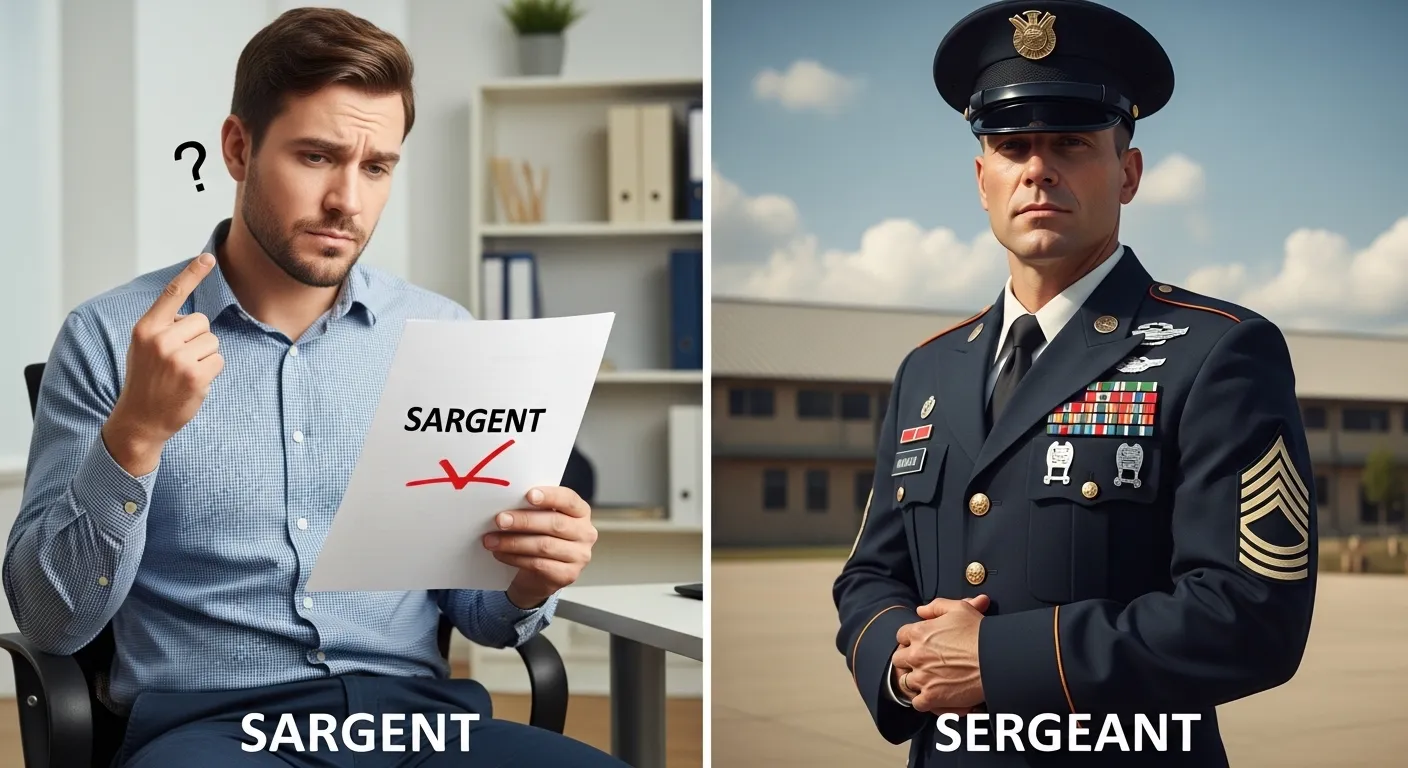
The correct spelling is sergeant.
Sargent is usually a spelling mistake.
Sergeant is a noun. It means a rank in the police or military.
Examples:
- Correct: The sergeant gave the order.
- Correct: She was promoted to sergeant last year.
- Incorrect: The sargent spoke to the team.
Quick rule:
Always use sergeant, not sargent, when writing the rank.
The Origin of Sergeant
The word sergeant comes from Old French. The French word was sergent, meaning servant or officer. This came from the Latin word serviens, meaning “one who serves.”
Over time, English kept the French spelling style. That is why the word has the unusual “ea” in the middle.
Why the confusion exists
The spelling does not match the sound. People pronounce it like “sar-jent,” so they write sargent by mistake.
English has many words like this:
| Word | Pronunciation | Confusing spelling |
| Sergeant | SAR-jent | ea sounds like a |
| Heart | HART | ea sounds like a |
| Learn | LERN | ea sounds like er |
This shows English spelling follows history, not always sound.
British English vs American English Spelling
Unlike many words, sergeant is spelled the same in British and American English. There is no difference.
Both the British Army and the United States Army use the spelling sergeant.
Comparison table
| Version | Correct spelling | Used in | Example |
| British English | Sergeant | UK, Australia, India | The sergeant spoke. |
| American English | Sergeant | USA | The sergeant arrived. |
| Incorrect version | Sargent | None officially | Wrong spelling |
Key point:
There is no official spelling “sargent.”
Which Spelling Should You Use?
You should always use sergeant in all situations.
Use sergeant if your audience is:
United States:
Use sergeant in military, police, and writing.
UK and Commonwealth countries:
Use sergeant in formal and informal writing. This includes countries in the Commonwealth of Nations.
Global audience:
Use sergeant. It is the only correct spelling worldwide.
Simple rule:
Sergeant is correct everywhere.
Common Mistakes with Sargent or Sergeant
Many writers make small spelling errors. Here are the most common ones.
Mistake 1: Writing sargent because of sound
❌ Wrong: The sargent gave instructions.
✅ Correct: The sergeant gave instructions.
Mistake 2: Thinking sargent is American spelling
❌ Wrong: American English uses sargent.
✅ Correct: Both use sergeant.
Mistake 3: Using sargent in formal writing
❌ Wrong: Dear Sargent Miller
✅ Correct: Dear Sergeant Miller
Mistake 4: Autocorrect confusion
Sometimes typing fast causes errors. Always check spelling.
Read More Excel or Statement: Which Term Fits Your Use Best?
Sargent or Sergeant in Everyday Examples
Here are examples from daily life.
Email example
Correct:
Dear Sergeant Khan,
Thank you for your service.
Incorrect:
Dear Sargent Khan
News example
Correct:
The police sergeant helped control the crowd.
Social media example
Correct:
My brother became a sergeant today!
Incorrect:
My brother became a sargent today!
Formal writing example
Correct:
Sergeant Ahmed led the team successfully.
Workplace example
Correct:
Please report to Sergeant Ali at 9 AM.
Sargent or Sergeant – Google Trends & Usage Data
Search data shows sergeant is far more popular than sargent.
According to Google search patterns:
- “Sergeant” is used worldwide.
- “Sargent” appears mostly as a mistake.
- Countries like the US, UK, Canada, and Australia use sergeant.
- Police, military, and official websites always use sergeant.
Context usage
| Context | Correct spelling |
| Military rank | Sergeant |
| Police rank | Sergeant |
| Movies and TV | Sergeant |
| Formal documents | Sergeant |
| Informal writing | Sergeant |
“Sargent” appears mostly in typing errors.
Comparison Table: Sargent vs Sergeant
| Feature | Sergeant | Sargent |
| Correct spelling | Yes | No |
| Official usage | Yes | No |
| Military use | Yes | No |
| Police use | Yes | No |
| Dictionary accepted | Yes | No |
| Professional writing | Yes | No |
| Common mistake | No | Yes |
FAQs About Sargent or Sergeant
1. Is sargent ever correct?
No. Sargent is usually a spelling mistake. Sergeant is correct.
2. Why do people write sargent?
Because it sounds like “sar-jent.” People spell it based on sound.
3. Is sergeant spelled differently in the US and UK?
No. Both use sergeant.
4. What does sergeant mean?
It is a rank in police or military.
5. How do you remember the correct spelling?
Remember: Sergeant has “ea” in the middle.
6. Is Sargent a name?
Yes. Sargent can be a surname. But not the rank spelling.
7. Is sergeant used in police and army?
Yes. Both use sergeant as a rank.
Conclusion
The confusion between sargent and sergeant is very common. This happens because English spelling does not always match pronunciation. The word sounds like “sar-jent,” which makes people think sargent is correct. But this is wrong.
Sergeant is the only correct spelling. It comes from Old French and Latin roots. Both American and British English use the same spelling. Military forces, police departments, and official organizations all use sergeant. The spelling sargent appears mostly as a mistake or surname.
Using the correct spelling helps your writing look professional. It also shows accuracy and respect, especially when referring to ranks and titles. Whether you write emails, articles, or stories, always use sergeant..

Andrew Michael Hurley is known for dark and atmospheric fiction. His stories often explore faith, fear, and isolation.