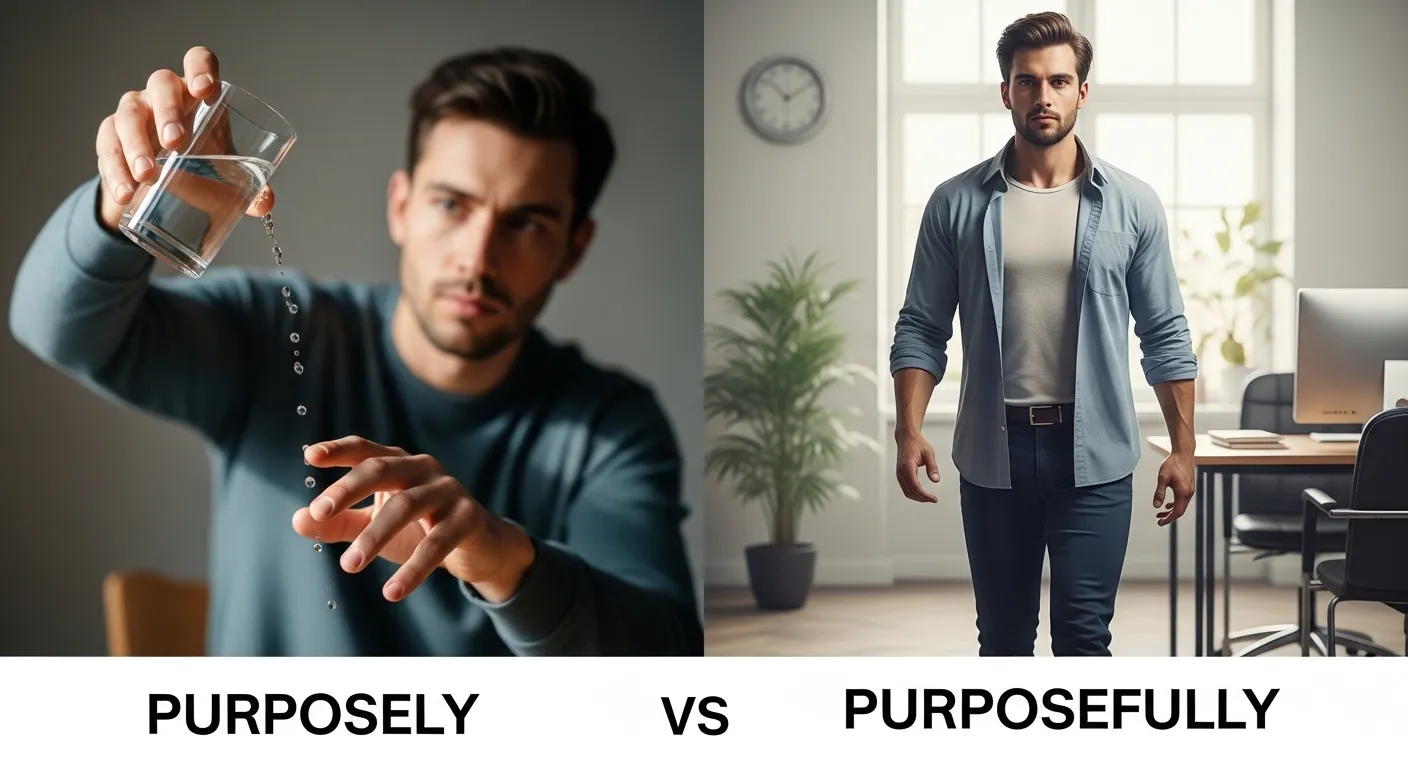
Have you ever written a sentence and paused at purposely or purposefully? Both words look right. Both relate to intention. But many writers feel unsure which one to use.
This confusion happens because the words are very similar. They come from the same root word, purpose. They both talk about doing something on purpose. Yet, they are not always the same in tone or use.
People search this keyword to avoid grammar mistakes. Students want better essays. Bloggers want clear writing. Professionals want emails that sound correct. Choosing the right word makes your message stronger and clearer.
The good news is simple: both words are correct. The difference is small but important. One is shorter and more common in daily speech. The other sounds more formal and careful.
In this guide, you will learn the quick answer, origin, spelling rules, examples, and expert advice. By the end, you will know exactly when to use purposely or purposefully with confidence.
Purposely or Purposefully – Quick Answer
Both purposely and purposefully mean done on purpose. They show intention.
However, there is a small difference:
- Purposely = done intentionally
- Purposefully = done intentionally OR done with strong purpose or determination
Examples
- She purposely ignored the message. ✅
- He purposefully ignored the message. ✅
- She walked purposefully into the office. ✅ (shows determination)
In many cases, both words work. But purposefully can also show strong intent or determination.
Quick Comparison Table
| Feature | Purposely | Purposefully |
| Meaning | Done intentionally | Done intentionally or with strong purpose |
| Length | Shorter | Longer |
| Tone | Casual, everyday | Formal, serious |
| Common in speech | Very common | Less common |
| Common in formal writing | Less common | More common |
The Origin of Purposely or Purposefully
Both words come from the root word purpose, which means aim or intention.
- Purposely formed by adding -ly to purpose
- Purposefully formed by adding -ful and -ly
The word purpose comes from Latin proponere, meaning “to put forward.”
According to Merriam-Webster, purposely appeared earlier in English. Later, purposefully developed to show stronger intention.
The Oxford English Dictionary explains that purposefully can also describe determined behavior, not just intention.
Why both exist
English often creates longer forms to add emphasis. For example:
- Care → Carefully
- Hope → Hopefully
- Purpose → Purposefully
So, purposefully adds emotional strength or seriousness.
Read More.Hidive or Crunchyroll: Which Streaming Service Is Better?
British English vs American English Spelling
Good news: there is no spelling difference between British and American English for these words.
Both regions use:
- Purposely
- Purposefully
The difference is only in usage style, not spelling.
Usage Comparison Table
| Region | Purposely | Purposefully |
| American English | More common in daily speech | Common in formal writing |
| British English | Common | Also common in formal writing |
| Academic writing | Less common | Preferred |
| Business writing | Acceptable | Preferred |
In both US and UK, purposefully sounds more formal and strong.
Which Spelling Should You Use?
Your choice depends on your audience and writing style.
Use Purposely when:
- Writing casually
- Sending emails
- Writing blogs
- Speaking normally
Example:
- He purposely left early.
Use Purposefully when:
- Writing academic papers
- Writing formal emails
- Writing professional content
- Showing strong determination
Example:
- She purposefully built her career.
Audience-Based Advice
| Audience | Best Choice |
| US casual writing | Purposely |
| UK casual writing | Purposely |
| Academic writing | Purposefully |
| Business writing | Purposefully |
| Global audience | Purposefully (safer choice) |
Simple rule:
- Casual → Purposely
- Formal → Purposefully
Common Mistakes with Purposely or Purposefully
Many writers make small errors. Here are common mistakes and fixes.
Mistake 1: Thinking one word is wrong
❌ Purposely is incorrect
✅ Both are correct
Mistake 2: Using purposefully when simple tone is needed
❌ I purposefully ate lunch.
✅ I purposely ate lunch.
(Simple actions sound better with purposely.)
Mistake 3: Using purposely when showing strong determination
❌ She purposely walked into danger.
✅ She purposefully walked into danger.
(Purposefully shows stronger intent.)
Mistake 4: Overusing purposefully
Too much formal tone sounds unnatural.
Balance is important.
Purposely or Purposefully in Everyday Examples
Here are real-world examples.
Email example
Casual email:
- I purposely delayed the meeting.
Formal email:
- I purposefully delayed the meeting to review the report.
News example
- The company purposely reduced costs.
- The leader purposefully changed the strategy.
Social media example
- He purposely ignored my comment.
- She purposefully worked hard for success.
Formal writing example
- The scientist purposefully designed the experiment.
- The author purposely used simple words.
Workplace example
- He purposely arrived early.
- She purposefully built a strong team.
Purposely or Purposefully – Google Trends & Usage Data
Data from Google Trends shows both words are widely used.
Key insights
- Purposely is more common in everyday searches
- Purposefully is common in academic and formal writing
- US users search purposely more often
- UK users use both equally
- Students search purposefully more often
Why purposely is more popular
Because it is:
- Shorter
- Easier to say
- Easier to write
Why purposefully is growing
Because it sounds:
- More formal
- More professional
- More precise
Full Comparison Table: Purposely vs Purposefully
| Feature | Purposely | Purposefully |
| Meaning | Intentionally | Intentionally or with determination |
| Formality | Casual | Formal |
| Length | Short | Long |
| Tone | Neutral | Strong |
| Speech use | Very common | Less common |
| Academic use | Less common | Preferred |
| Professional writing | Acceptable | Better |
| Emotional strength | Normal | Strong |
| Popularity | Higher overall | Growing |
FAQs About Purposely or Purposefully
1. Is purposely or purposefully correct?
Both are correct. Use purposely for casual writing and purposefully for formal writing.
2. Do they mean the same thing?
Mostly yes. But purposefully can also show strong determination.
3. Which word is more formal?
Purposefully is more formal.
4. Which word is more common?
Purposely is more common in everyday speech.
5. Can I use purposely in academic writing?
Yes, but purposefully sounds more professional.
6. Is purposely wrong grammar?
No. Purposely is correct grammar.
7. Which word should students use?
Students should use purposefully in essays and formal assignments.
Conclusion
The confusion between purposely or purposefully is very common. Both words are correct. Both show intention. But the difference is in tone and strength.
Purposely is shorter and more common in daily speech. It works well in casual writing, emails, and conversations. It is simple and clear.
Purposefully is longer and sounds more formal. It also shows stronger intention or determination. This makes it better for academic writing, professional emails, and serious content.
There is no spelling difference between British and American English. The choice depends on your audience and purpose.
If you want safe, professional writing, use purposefully. If you want simple, casual writing, use purposely.
Understanding this small difference improves clarity. It makes your writing stronger. It also helps you communicate your intention clearly and confidently..

David Szalay a British writer who focuses on modern life and relationships. His stories are simple but deep.