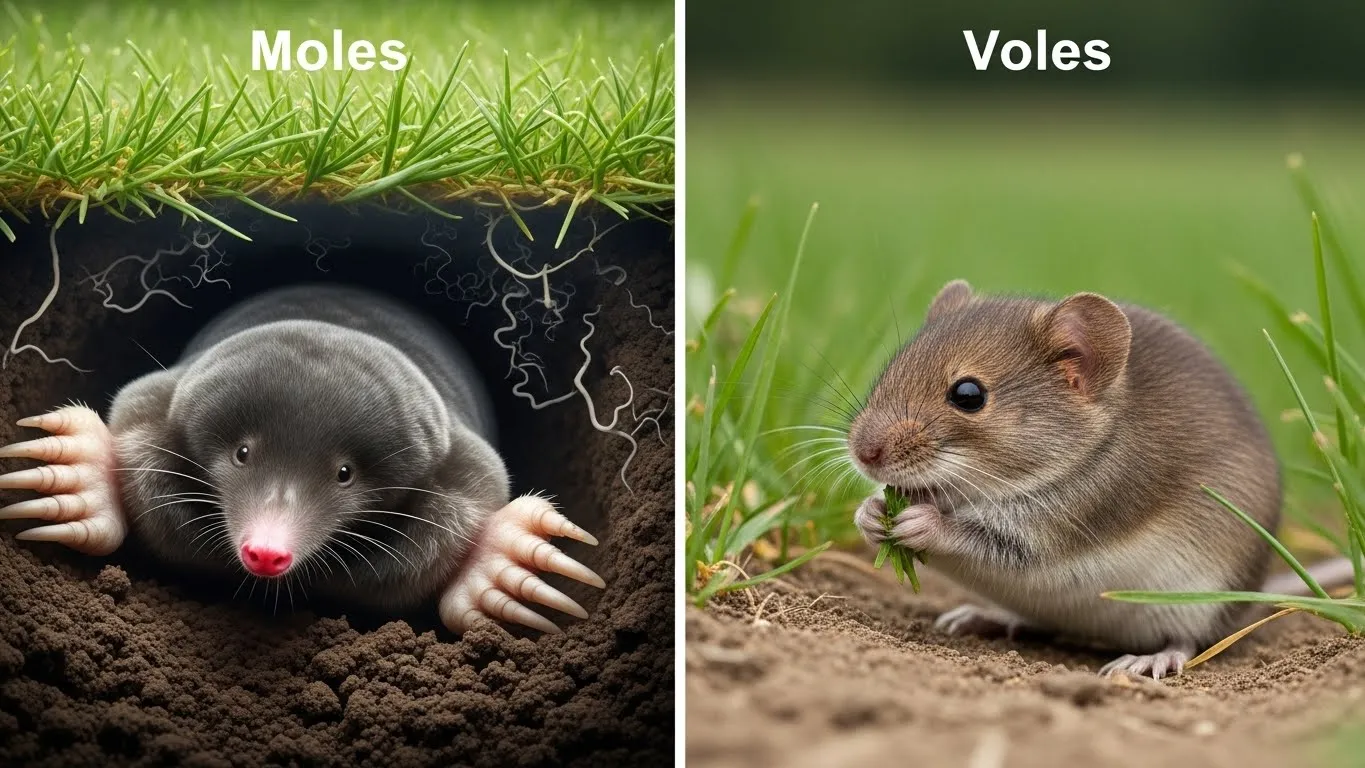
People often search for “moles or voles” because these two small animals look similar and cause similar problems especially in gardens, lawns, and farms.
If you see tunnels in your yard or plants dying for no clear reason, you may wonder which animal is responsible. Many people confuse moles and voles because both live close to the ground, are small mammals, and are rarely seen in the open
However, they behave very differently and cause different types of damage.
Understanding the difference between moles and voles helps you choose the right solution. Treating a vole problem like a mole problem can waste time and money. This article clears up that confusion quickly and clearly.
You’ll learn what moles and voles are, how they differ, where the confusion comes from, and how each term is used in everyday English. Whether you’re a homeowner, gardener,
student, or writer, this guide gives you a fast answer, real examples, and practical advice without complex language.
Moles or Voles – Quick Answer
Moles are burrowing insect-eaters that create raised tunnels in soil.
Voles are small rodents that eat plants, roots, and grass.
Example:
- Raised soil ridges in a lawn → Moles
- Chewed plants and surface runways → Voles
They are different animals, not different spellings of the same word.
The Origin of Moles or Voles
The word mole comes from Old English mol, meaning “earth digger.” Moles have been known for centuries as underground animals.
The word vole comes from Norwegian vollmus, meaning “field mouse.” Voles are closely related to mice and lemmings.
There is no spelling variation here. The confusion exists because the animals share habitats and are both small and hard to spot.
British English vs American English Spelling
There is no spelling difference between British and American English for these words.
| Term | British English | American English | Meaning |
| Mole | Mole | Mole | Burrowing insect-eater |
| Vole | Vole | Vole | Plant-eating rodent |
Both regions use the same spelling and meaning.
Which Term Should You Use?
Use mole if:
- You see underground tunnels
- Soil is pushed up
- No plants are eaten
Use vole if:
- Plants are chewed
- Bark is damaged
- Grass paths appear on the surface
For global or professional writing, always use the correct animal name based on behavior, not appearance.
Read More.Judgments or Judgements: Which Spelling Is Correct?
Common Mistakes with Moles or Voles
❌ Calling all lawn pests “moles”
✔️ Identify damage before naming the animal
❌ Assuming spelling varies by country
✔️ Both words are spelled the same worldwide
❌ Using the terms interchangeably
✔️ Moles and voles are biologically different
Moles or Voles in Everyday Examples
Email:
“Something is digging tunnels in my lawn. I think we have moles.”
News:
“Farmers report crop damage caused by voles this season.”
Social Media:
“These voles destroyed my garden overnight!”
Formal Writing:
“Moles primarily feed on insects, while voles consume vegetation.”
Moles or Voles – Google Trends & Usage Data
Search interest in moles or voles is highest in:
- The US, UK, and Canada (gardening topics)
- Spring and autumn (pest activity seasons)
“Moles” is searched more for lawn damage.
“Voles” is searched more for crop and plant damage.
Comparison Table: Moles vs Voles
| Feature | Moles | Voles |
| Diet | Insects, worms | Plants, roots |
| Damage | Raised tunnels | Chewed plants |
| Rodent | No | Yes |
| Visibility | Rarely seen | Often seen |
| Habitat | Underground | Surface and shallow burrows |
1. Are moles and voles the same animal?
No. They are completely different species.
2. Which one damages plants more?
Voles cause more plant damage.
3. Do moles eat roots?
No. They eat insects.
4. Are voles mice?
They are rodent relatives, similar to mice.
5. Do moles bite plants?
No, plant damage is usually from voles.
6. Is “vole” ever spelled differently?
No, the spelling is always “vole.”
7. Which is harder to control?
Voles are often harder because they breed quickly.
Conclusion
The confusion around moles or voles comes from their similar size and shared environments, not from spelling differences. Moles are underground insect-eaters that create tunnels but do not eat plants.
Voles are small rodents that damage grass, roots, and crops. Knowing which one you’re dealing with saves time, money, and frustration. There is no British or American spelling difference both words are universal in English.
Always identify the type of damage before choosing a solution or using the term in writing. Whether you’re protecting a garden, writing an article, or answering a quick question, understanding the difference between moles and voles gives you clarity and confidence.

Jon McGregor a British writer known for quiet, realistic stories. His writing focuses on everyday life and human emotions.