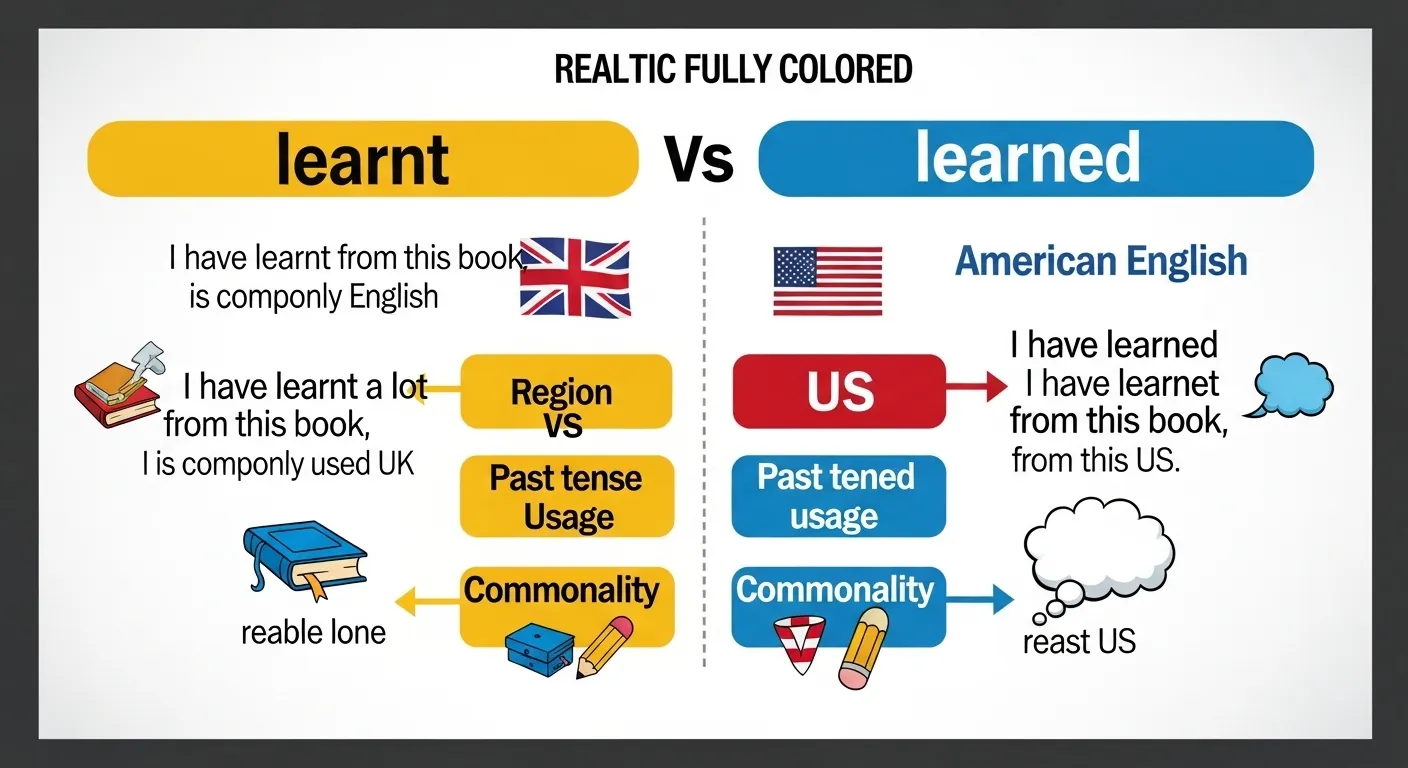
Many English learners and even native speakers often get confused between “learnt” and “learned.” Both words are past tense forms of the verb learn, but when and where to use each can be tricky.
People search for “learnt or learned” to ensure they are using the correct form in emails, essays, or professional writing. Using the wrong form may make writing sound less polished, especially in formal contexts.
In this article, we will break down the difference between learnt and learned, explore their origins, compare British and American usage, and give practical advice for daily writing.
Whether you are a student, professional, or content creator, understanding this subtle difference will help you write confidently and avoid common mistakes.
Learnt or Learned – Quick Answer
- Learned → Most common in American English as the simple past tense of learn.
Example: I learned French in high school. - Learnt → Standard in British English as the simple past tense of learn.
Example: She learnt to drive last year.
Key Tip: Both are correct; the choice depends on your audience’s English variant.
The Origin of Learnt or Learned
The word learn comes from Old English leornian, meaning “to study, to acquire knowledge.” In early English, past tense forms were often irregular. Over time, English developed two main forms for the past tense:
- Learned → Developed as the regular past tense form.
- Learnt → Developed as an irregular variant in British English.
Both forms have been used since the 16th century. British writers often prefer learnt, while American writers consistently use learned.
British English vs American English Spelling
The main difference is regional preference. Here’s a simple comparison:
| Form | Region | Example Sentence |
| Learned | American English | I learned how to swim last summer. |
| Learnt | British English | She learnt to play the piano young. |
Rule of Thumb:
- US English: Always use learned.
- UK & Commonwealth: Learnt is acceptable and commonly used.
Which Spelling Should You Use?
Choosing between learnt and learned depends on your audience:
- United States: Use learned for all writing—formal or informal.
- United Kingdom, Australia, Canada: Both are acceptable, but learnt is more traditional in informal writing.
- Global audience (web, blogs, social media): Consider learned since it is widely understood internationally.
Pro Tip: If writing for professional or academic contexts, check the style guide. APA, Chicago, and MLA prefer learned.
Read More Up or Down: Know the Meaning Difference Clearly
Common Mistakes with Learnt or Learned
Even native speakers make mistakes. Here are some frequent errors:
- Mixing forms in the same text:
❌ I learnt French and learned Spanish last year.
✅ I learnt French and Spanish last year. (UK)
✅ I learned French and Spanish last year. (US) - Using “learnt” in American English:
❌ She learnt about the new project yesterday.
✅ She learned about the new project yesterday. - Mispronunciation: Some pronounce learnt as “learned” in speech, which can confuse listeners.
Quick Fix: Pick one variant and stick with it throughout your writing.
Learnt or Learned in Everyday Examples
Emails:
- UK: I learnt about the meeting schedule yesterday.
- US: I learned about the meeting schedule yesterday.
News Articles:
- UK: The committee learnt the details of the proposal.
- US: The committee learned the details of the proposal.
Social Media Posts:
- UK: Just learnt a cool trick in Photoshop!
- US: Just learned a cool trick in Photoshop!
Formal Writing:
- UK: Participants learnt valuable skills during the workshop.
- US: Participants learned valuable skills during the workshop.
Learnt or Learned – Google Trends & Usage Data
Using Google Trends, we can see:
- United States: Learned dominates, almost 100% preference.
- United Kingdom: Learnt is common but learned is still widely used.
- Australia, Canada, New Zealand: Both forms appear, with slight preference for learnt in informal contexts.
- Global searches: Learned is more searched and recognized internationally.
Takeaway: For online content, using learned increases global readability.
Learnt or Learned – Side by Side Comparison Table
| Feature | Learned | Learnt |
| Region | US | UK/Commonwealth |
| Common in formal writing | ✅ Yes | ✅ Sometimes |
| Common in informal writing | ✅ Yes | ✅ Yes |
| Usage in global English | ✅ Widely understood | ⚠ Less common outside UK |
| Example | I learned coding online. | I learnt coding online. |
FAQs: Learnt or Learned
1. Are “learnt” and “learned” interchangeable?
Yes, depending on regional usage. UK accepts both, US prefers learned.
2. Which form is more formal?
Learned is safer for formal writing worldwide.
3. Can I use “learnt” in academic writing?
In the UK, yes. In the US, avoid it—use learned.
4. How do I pronounce “learnt”?
It’s pronounced /lɜːnt/ in British English.
5. Is “learned” also an adjective?
Yes. Learned can describe someone knowledgeable: “a learned scholar.”
6. Can I mix both forms in the same text?
Avoid it. Pick one for consistency.
7. Which form is better for SEO content?
Learned is recommended for global readability and Google searches.
Conclusion
Understanding the difference between learnt and learned is simple once you know your audience. In the US, always use learned.
In UK and Commonwealth countries, learnt is traditional, though learned is acceptable. For global communication, online writing, or professional contexts, learned is safer and widely understood.
Avoid mixing forms in the same text, and remember that consistency matters more than which variant you choose.
Use these forms correctly in emails, social media, news articles, and formal writing to appear polished and confident.
Ultimately, knowing the subtle difference helps writers communicate clearly, avoid mistakes, and tailor their language to regional expectations.
Next time you type that past tense of learn, you’ll know whether learnt or learned fits your context perfectly.

Sarah Hall is an English novelist and short story writer. She often writes about nature, identity, and strong characters.