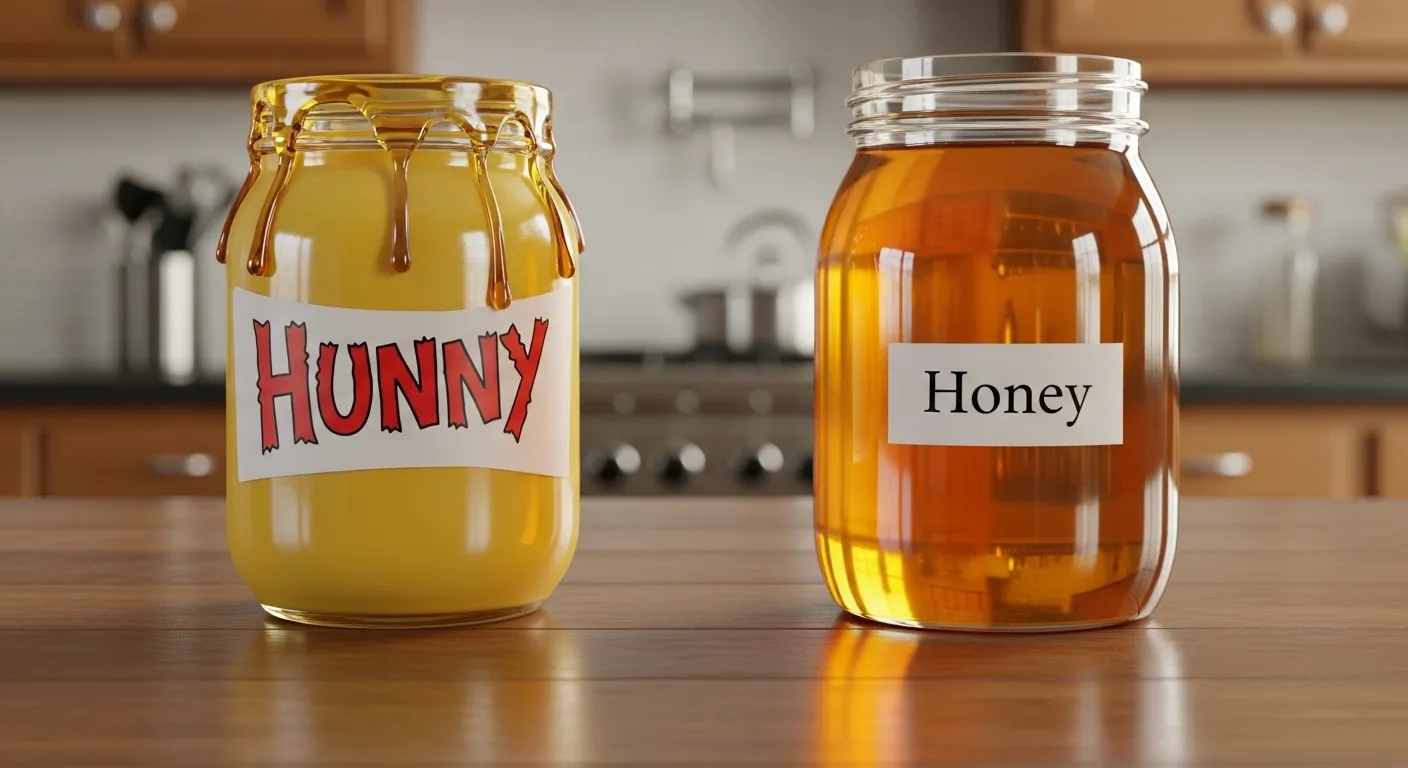
Have you ever wondered why some people write “hunny” while others write “honey”? If you’ve ever typed a text, read a recipe, or scrolled social media, this spelling confusion might have caught your eye.
Many English learners, writers, and even native speakers get puzzled: is “hunny” a playful variation, a typo, or an actual word?
This article clears the confusion once and for all. We will explain the difference between hunny and honey, explore their history, compare British and American English usage, and show you which spelling is correct in different contexts.
By the end, you’ll know exactly when to use “honey” and when “hunny” might appear, helping you write confidently in emails, blogs, social media, or formal documents.
Hunny or Honey – Quick Answer
The correct standard spelling is honey.
- Honey → The sweet substance produced by bees; also used as a term of endearment.
- Example: “I love adding honey to my tea.”
- Example: “Come here, honey!”
- Hunny → Not standard English; often used as a playful, childlike, or stylistic spelling.
- Example: Winnie the Pooh says “hunny” on jars in children’s books.
- Example: “Happy birthday, my hunny!” (informal, stylistic)
✅ Quick takeaway: For professional, formal, or standard writing, always use honey. “Hunny” is only for fun, artistic, or nostalgic contexts.
The Origin of Hunny or Honey
The word honey comes from Old English “hunig”, meaning the sweet substance made by bees. The spelling evolved gradually over centuries to the modern “honey”.
- Early English texts (c. 900 AD) used variations like hunig, huny, or huni.
- Modern standard English settled on honey by the 15th century.
Hunny is not an official historical spelling. It appears mainly in literature and media for stylistic purposes. Most famously:
- Winnie the Pooh (A. A. Milne) used “hunny” to mimic childlike writing.
- Contemporary social media and casual writing sometimes adopt hunny as a cute variant.
British English vs American English Spelling
Both British and American English spell it as honey in standard writing. There is no official difference between the two in this case.
| Spelling | Region | Notes |
| honey | UK & US | Correct, standard English spelling. |
| hunny | UK & US | Informal, playful, or literary use only. |
Key points:
- British English → “Honey” is used in food, writing, and speech.
- American English → Same usage. “Hunny” is mainly cultural/artistic.
Which Spelling Should You Use?
- Professional writing: Always use honey.
- Emails, blogs, academic writing, news articles → “honey”
- Casual or social contexts: You might see hunny as a cute or playful variant.
- Text messages, memes, children’s stories → “hunny”
Global advice: If you are unsure, stick with honey. It works everywhere, from the US to the UK, Australia, India, and beyond.
Read More eg or ie: What’s the Difference, Meaning, and Correct Usage Guide
Common Mistakes with Hunny or Honey
- Using “hunny” in formal writing → ❌ Incorrect
- Wrong: “Please add hunny to the recipe.”
- Correct: “Please add honey to the recipe.”
- Confusing pronunciation with spelling →
- Correct pronunciation is the same: /ˈhʌni/
- Mixing “hunny” and “honey” randomly →
- Keep consistent: choose either standard or playful style, don’t switch mid-text.
- Thinking “hunny” is a typo →
- Sometimes it is intentional in literary or playful contexts.
Hunny or Honey in Everyday Examples
Emails
- Standard: “Could you please send me the honey samples by Friday?” ✅
- Informal/fun: “Hey hunny, let’s grab coffee later!” 💬
News Articles
- Correct: “Local beekeepers report a high yield of honey this season.” ✅
- Incorrect: “Local beekeepers report a high yield of hunny.” ❌
Social Media
- Casual: “I love you, hunny! 🥰” ✅
- Formal: Avoid “hunny” in professional posts.
Recipes & Food Labels
- Always use honey → “2 tbsp honey” ✅
- “Hunny” might appear on children’s products for fun.
Hunny or Honey – Google Trends & Usage Data
Google Trends shows:
- Honey → Extremely high global search volume. Popular in recipes, health, and DIY content.
- Hunny → Low search volume, mostly tied to Winnie the Pooh, memes, or casual texts.
Top countries searching for “honey”: USA, UK, India, Australia, Canada.
Top countries searching for “hunny”: USA, UK, often in context of children’s media.
Keyword Comparison Table
| Keyword | Standard? | Usage Context | Notes |
| honey | ✅ Yes | All formal & informal writing | Always correct |
| hunny | ❌ No | Informal, playful, literary | Limited to media or social texts |
FAQs
1. Is “hunny” a correct spelling?
- No, only “honey” is correct in standard English.
2. Can I use “hunny” in text messages?
- Yes, it’s informal and often used to show affection.
3. Why does Winnie the Pooh spell it “hunny”?
- To mimic a child’s writing style and make it playful.
4. Is there a difference in UK vs US spelling?
- No difference; both use honey in standard English.
5. Can “hunny” appear on food packaging?
- Rarely, usually in products aimed at children.
6. Which one should I use for SEO?
- Use honey. It’s searched millions of times; “hunny” is niche.
7. How do I pronounce “hunny” vs “honey”?
- Both are pronounced the same: /ˈhʌni/.
Conclusion
In conclusion, the correct standard spelling is honey. “Hunny” is a playful or literary variant, popularized by Winnie the Pooh and casual contexts.
When writing for professional, academic, or global audiences, always stick with honey to avoid confusion.
For informal communication, social media posts, or children’s content, hunny can add a cute or playful tone. Remember: spelling consistency is key, especially if your goal is clarity or optimization.
By understanding the difference, you can write confidently in any context from recipes to emails to blogs without worrying about being marked incorrect.
Ultimately, choosing between hunny and honey depends on your audience, context, and intent. Standard English favors honey everywhere.

Sarah Hall is an English novelist and short story writer. She often writes about nature, identity, and strong characters.