You flip a coin to make a quick choice. Someone asks, “Head or tail?” This simple question decides many small moments in life.
It helps pick teams, settle debates, or make fair decisions. But many people feel confused about the correct form. Should you say head or tail, heads or tails, or something else?
People search for “head or tail” because they want the correct phrase. They see both forms in movies, sports, and daily talk. Some think one is British and the other is American.
Others wonder if one is formal and the other is casual.
The truth is simple. Both forms exist, but they have different uses. Knowing when to use each makes your English clear and correct.
This guide explains the meaning, origin, spelling, usage, and common mistakes. By the end, you will know exactly which form to use in emails, writing, and conversation.
Head or Tail – Quick Answer
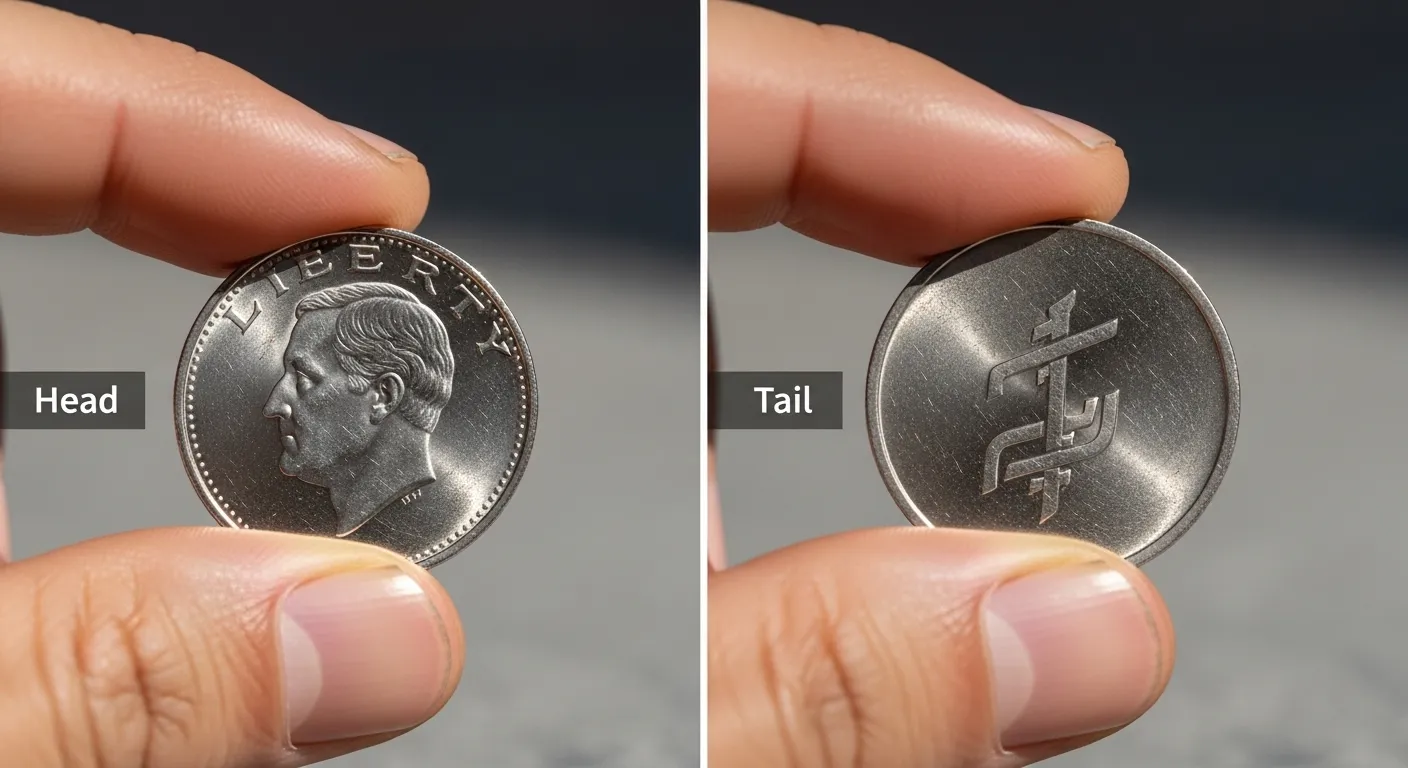
“Head or tail” refers to the two sides of a coin. It is used when making a choice by flipping a coin.
- Head = the side with a person’s face
- Tail = the opposite side
However, in real usage, people usually say “heads or tails.”
Examples:
- Correct: Let’s flip a coin. Head or tail?
- More common: Call it. Heads or tails?
- Correct: The coin landed on head.
- Correct: The coin landed on tail.
Quick tip:
- Head or tail = singular form
- Heads or tails = more common in speech
The Origin of Head or Tail
The phrase comes from coins used hundreds of years ago.
Early coins had:
- A ruler’s face on one side → called head
- A symbol or design on the other side → called tail
The word head comes from Old English “heafod,” meaning top or front.
The word tail comes from Old English “tægel,” meaning end or back.
People began using coin flipping as a fair way to decide things. Over time, the phrase “heads or tails” became popular.
Why plural became common
People say heads or tails because it sounds natural when asking someone to choose.
Example:
- Natural: Heads or tails?
- Less common: Head or tail?
Both are correct, but plural is more common in modern English.
British English vs American English Spelling
There is no spelling difference between British and American English for “head or tail.”
Both use the same spelling.
However, usage patterns differ slightly.
- British English often uses heads or tails
- American English also prefers heads or tails
The singular form appears more in technical or instructional contexts.
Comparison Table
| Feature | British English | American English |
| Singular form | head or tail | head or tail |
| Plural form | heads or tails (more common) | heads or tails (more common) |
| Coin toss question | Heads or tails? | Heads or tails? |
| Instruction use | head or tail possible | head or tail possible |
| Everyday speech | heads or tails preferred | heads or tails preferred |
Both versions are correct worldwide.
Which Spelling Should You Use?
Your choice depends on context and audience.
Use “heads or tails” for:
- Everyday conversation
- Informal writing
- Social media
- General use
Example:
- Heads or tails? You choose.
Use “head or tail” for:
- Technical writing
- Instructions
- Formal explanations
Example:
- The coin has head or tail.
Audience-based advice
| Audience | Best Choice |
| United States | heads or tails |
| United Kingdom | heads or tails |
| Australia | heads or tails |
| Canada | heads or tails |
| Global audience | heads or tails |
Best general advice: use “heads or tails.”
Common Mistakes with Head or Tail
Many learners make small mistakes. Here are common errors and fixes.
Mistake 1: Using wrong plural
❌ Head or tails
✔ Heads or tails
Mistake 2: Using incorrect form in questions
❌ Call it: head or tail?
✔ Call it: heads or tails?
Mistake 3: Mixing forms
❌ The coin landed on heads or tail
✔ The coin landed on heads
✔ The coin landed on tail
Mistake 4: Wrong verb agreement
❌ Heads or tails is your choice
✔ Heads or tails are your choices
Mistake 5: Confusing with metaphor
Sometimes “head or tail” means beginning or end.
Example:
- I cannot make head or tail of it.
This means “I do not understand.”
Read More Moles or Voles: Spot the Difference Without Confusion
Head or Tail in Everyday Examples
Here is how people use the phrase in real life.
Email example
Subject: Quick decision
We cannot agree. Let’s flip a coin. Head or tail will decide the winner.
News example
The referee used a coin toss. The captain called heads or tails.
Social media example
We cannot pick a restaurant. Heads or tails will decide tonight.
Formal writing example
The experiment uses a coin with two sides: head or tail.
Sports example
The team won the toss after calling heads.
Head or Tail – Google Trends & Usage Data
Search data shows clear patterns.
Most popular form: heads or tails
This form is searched more because:
- It is used in movies
- It is used in sports
- It is used in daily speech
Popular countries
High usage appears in:
- United States
- United Kingdom
- Canada
- Australia
- India
- Pakistan
Contexts where people search it
People search this phrase when they want to:
- Learn correct English
- Understand coin toss terms
- Use correct grammar
- Write correctly
Usage comparison table
| Variation | Popularity | Usage context |
| head or tail | Medium | technical, learning |
| heads or tails | Very high | daily speech |
| head or tails | Low | incorrect |
| heads or tail | Low | incorrect |
Comparison Table: Head or Tail vs Heads or Tails
| Feature | Head or Tail | Heads or Tails |
| Grammar | Singular | Plural |
| Common usage | Less common | Most common |
| Conversation | Rare | Very common |
| Formal writing | Acceptable | Acceptable |
| Coin toss question | Less natural | Most natural |
| Global usage | Correct | Preferred |
FAQs About Head or Tail
1. Is it head or tail or heads or tails?
Both are correct. But heads or tails is more common.
2. Which is correct in a coin toss?
The correct and natural phrase is:
Heads or tails?
3. Is head or tail British or American?
Both British and American English use the same forms.
No spelling difference exists.
4. Why do people say heads or tails?
Plural sounds more natural in spoken English.
It became the standard phrase.
5. Can I use head or tail in formal writing?
Yes. It is correct in formal and technical contexts.
6. What does “cannot make head or tail of it” mean?
It means you cannot understand something.
Example:
I cannot make head or tail of these instructions.
7. Is head or tail grammatically wrong?
No. It is correct. But heads or tails is preferred in conversation.
Conclusion
The phrase head or tail refers to the two sides of a coin. It has existed for hundreds of years. The side with the face is called head. The opposite side is called tail.
Both British and American English use the same spelling. There is no spelling difference between regions.
However, usage matters. The plural form heads or tails is more common in daily speech. People use it when flipping a coin or making a choice. The singular form head or tail appears more in instructions and formal explanations.
Understanding the difference helps you use correct English. It improves your writing, speaking, and communication. If you are unsure, use heads or tails.
It is the safest and most natural choice worldwide.
Now you can use the phrase confidently in emails, conversations, and formal writing. You know the meaning, origin, and correct usage.

David Szalay a British writer who focuses on modern life and relationships. His stories are simple but deep.