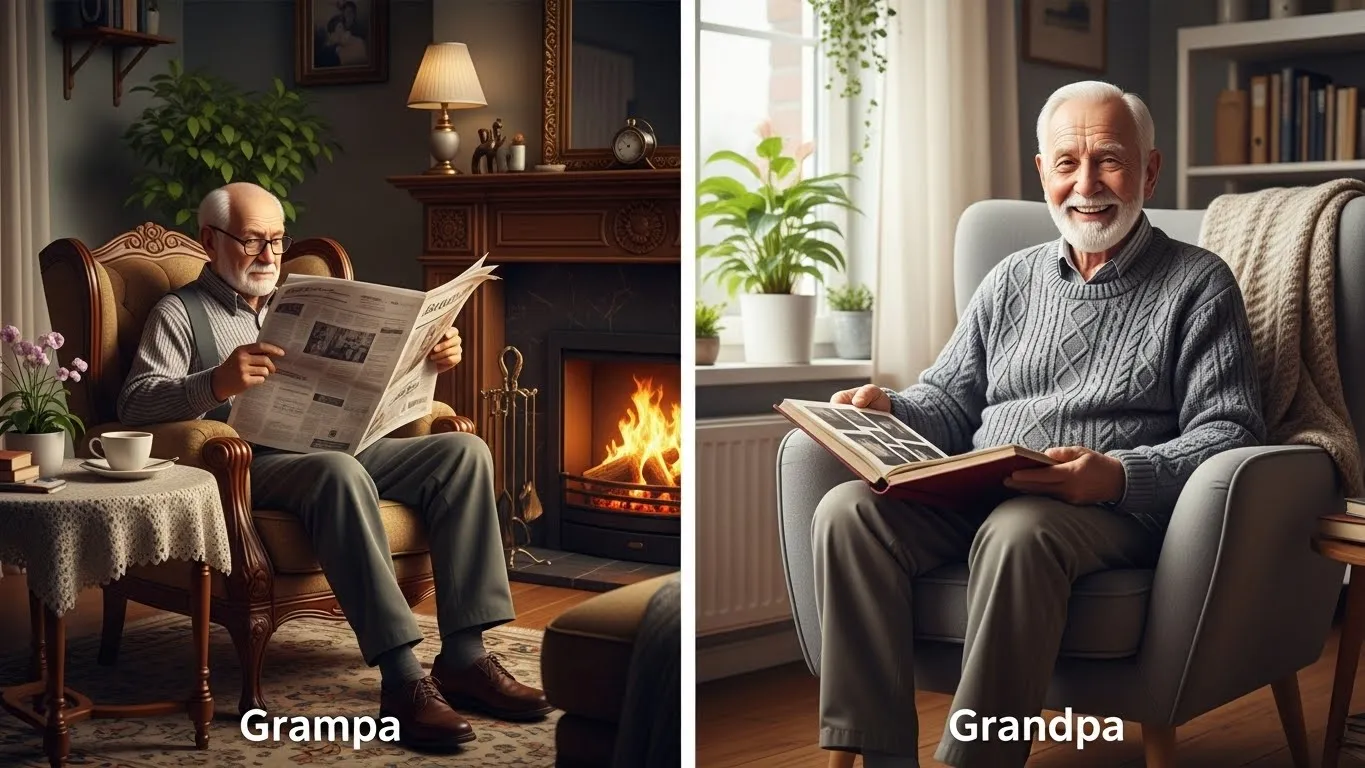
When writing about your beloved grandfather, you might wonder: should it be grampa or grandpa? Many people search this online because both spellings appear in different texts,
social media posts, and even official documents. Choosing the wrong one can make your writing look informal or incorrect. In this article, we’ll clarify the difference, explore their origins,
compare British and American usage, and give tips on which spelling to use. By the end, you’ll know exactly how to write it properly in emails, messages, and formal writing.
Grampa or Grandpa – Quick Answer
Grandpa is the most widely accepted spelling in both American and British English.
Grampa is an informal variant, often used in casual speech or children’s writing.
Examples:
- Correct (formal/standard): I visited my grandpa last weekend.
- Informal/variant: Grampa loves telling stories about his childhood.
In short, if you’re writing for school, work, or publication, use grandpa. Use grampa in casual notes or personal messages.
The Origin of Grampa/Grandpa
The word grandpa comes from grandfather, where “grand” indicates an extra generation.
- Grandfather → Grandpa: Shortened over time for convenience.
- Grampa: A phonetic spelling that reflects how children often pronounce it.
Both forms are centuries old, but grandpa became the standard in print.
British English vs American English Spelling
| Spelling | Region Usage | Formality | Notes |
| Grandpa | US & UK | Standard/Formal | Widely accepted in dictionaries. |
| Grampa | US (informal) | Casual | Often appears in letters, comics, blogs. |
Tip: British English prefers grandpa, while grampa is more US informal speech.
Which Spelling Should You Use?
- American readers: Use grandpa for formal and semi-formal writing. Grampa is fine in family letters or children’s books.
- British/Commonwealth readers: Always stick to grandpa.
- Global audience: Grandpa is safer and universally understood.
- Read More.Pavilion or Pavillion: Which Spelling Is Correct and Why It Matters
Common Mistakes with Grampa/Grandpa
- Using grampa in formal writing – incorrect in emails, essays, and articles.
- Mixing spellings in the same document – inconsistent style looks unprofessional.
- Confusing with grandma – ensure gender matches: grandpa (male), grandma (female).
Correct Usage: Grandpa loves gardening.
Incorrect Usage: Grampa loves gardening (in a formal essay).
Grampa in Everyday Examples
- Email: “I’ll visit my grandpa this weekend.” ✅
- Social media post: “Grampa’s homemade cookies are the best!” ✅
- News article: “Local grandpa celebrates 90th birthday.” ✅
- Children’s storybook: “Grampa and I went fishing.” ✅
Grampa or Grandpa – Google Trends & Usage Data
According to search data:
- Grandpa dominates worldwide searches.
- Grampa shows minor peaks in casual US contexts, especially in blogs or family forums.
- Top countries for ‘grandpa’ searches: USA, UK, Canada, Australia.
Quick Comparison Table:
| Variant | Google Popularity | Use Case |
| Grandpa | High | Formal, standard |
| Grampa | Low | Informal, casual/fun |
FAQs
1. Is grampa correct?
Yes, but it’s informal. Use grandpa for formal writing.
2. Can I use grampa in a school essay?
No, essays and professional writing require grandpa.
3. Why do some people spell it grampa?
It reflects casual pronunciation or children’s speech.
4. Is grandpa used in both US and UK?
Yes, it is standard in both regions.
5. Can grampa appear in books?
Yes, especially in children’s books or comics.
6. Are there other nicknames for grandpa?
Yes: pop, papa, papi, granddad.
7. Should I change grampa to grandpa in emails?
For professional emails, always use grandpa.
Conclusion
When writing about your grandfather, grandpa is the safe, standard spelling for both American and British audiences. Grampa is acceptable only in casual, personal, or children-focused contexts. Remember:
consistency is key—don’t mix the two spellings in formal documents. By understanding the origin, usage, and regional preferences, you can communicate clearly and professionally.
Whether you’re writing a letter, a story, or a social media post, using grandpa ensures your writing is correct, respectful, and easily understood.

David Szalay a British writer who focuses on modern life and relationships. His stories are simple but deep.