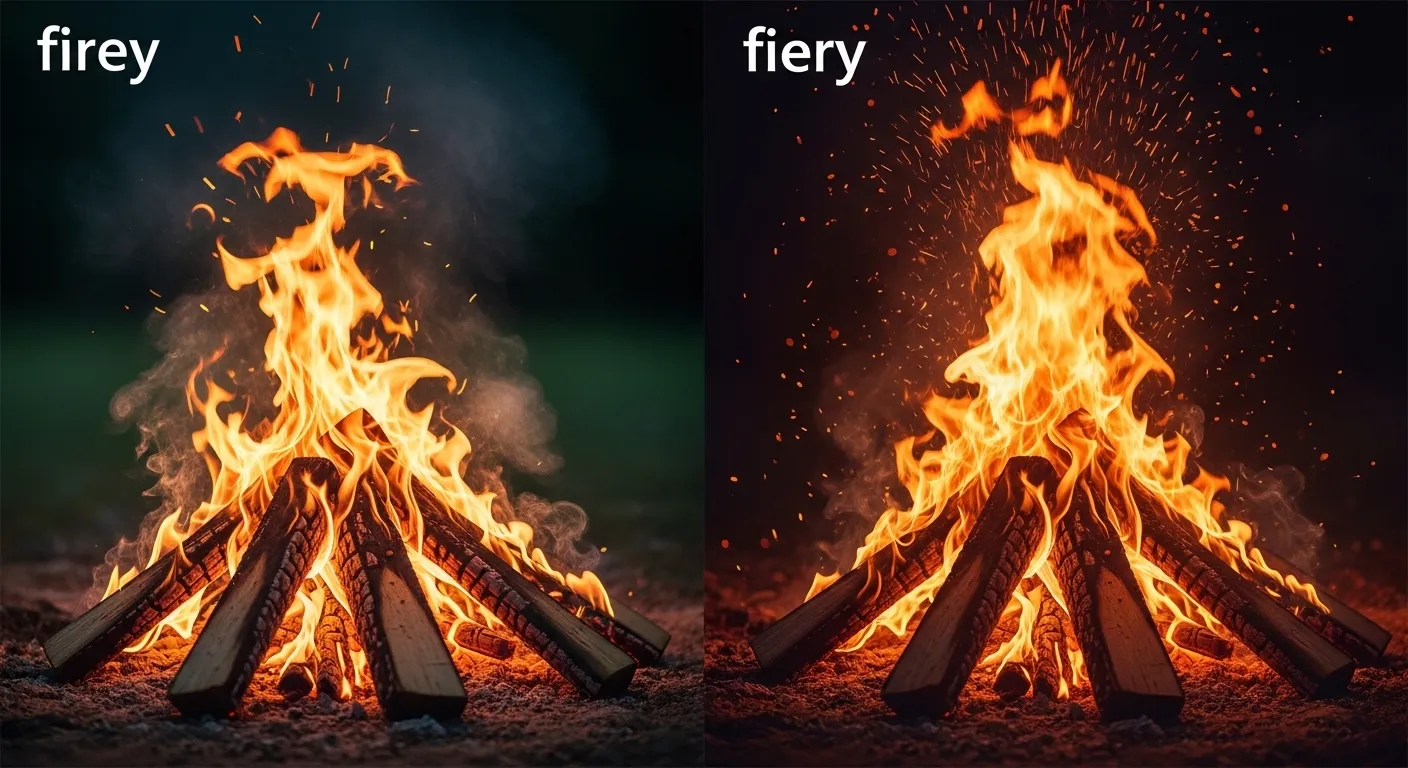
Do you ever wonder if it’s “firey” or “fiery”? You’re not alone. Many English speakers are confused about this spelling because both sound similar.
The word describes something full of fire, energy, or passion. People often type “firey” by mistake when writing emails, social media posts, or essays. Knowing the correct spelling can make your writing look professional and clear.
This guide explains the difference, origin, and proper usage of firey vs fiery, with examples for British and American English. You’ll also see common mistakes, usage in everyday writing, and helpful trends.
By the end, you’ll confidently choose the correct spelling for any context.
Firey or Fiery – Quick Answer
The correct spelling is “fiery”.
- ✅ Fiery – Correct
- ❌ Firey – Incorrect
Examples:
- Her fiery speech inspired everyone in the room.
- The sunset painted the sky with fiery shades of orange and red.
Tip: Think of “fire” + “-y,” but remember the “e” drops and becomes fiery.
The Origin of Firey/Fiery
Fiery comes from Old English “fȳr” meaning “fire.” Over time, the spelling evolved into fiery, keeping the meaning “full of fire or passion.”
- 15th Century: Appears as fiery in texts.
- Middle English: Variants like firey existed but were not standard.
- Modern English: Fiery is accepted in dictionaries worldwide.
The confusion arises because English often keeps vowel sounds from the root word. “Fire” + “y” might seem logical, but traditional spelling rules drop the e to form fiery.
Read More.Maui or Honolulu: Pick the Perfect Hawaiian Vacation Spot
British English vs American English Spelling
Both British and American English use fiery. The spelling firey is considered a mistake in both versions. There are no regional differences for this word.
Comparison Table:
| Word | Correct? | UK English | US English | Notes |
| Fiery | ✅ | ✅ | ✅ | Standard spelling |
| Firey | ❌ | ❌ | ❌ | Common typo |
Rule Reminder: Words ending in “e” + “y” often drop the “e” (e.g., fiery, dyeing, lying).
Which Spelling Should You Use?
Use fiery in all formal and informal contexts.
- US writers: Always fiery
- UK writers: Always fiery
- Global English: Standardized as fiery, especially in international publications
Tip for non-native speakers: Memorize fiery as the only correct option. Avoid using firey even in casual contexts—it looks like a typo.
Common Mistakes with Firey/Fiery
Many people type firey because it seems logical from the word “fire.” Here are common mistakes and corrections:
| Incorrect | Correct | Explanation |
| firey | fiery | The “e” is dropped before adding “y” |
| Her firey temper | Her fiery temper | Adjective describing passion or anger |
| A firey sunset | A fiery sunset | Adjective describing color or intensity |
| firey eyes | fiery eyes | Adjective describing emotion or energy |
Firey/Fiery in Everyday Examples
Emails:
- Correct: “We need a fiery campaign to attract new customers.”
- Incorrect: “We need a firey campaign…”
Social Media:
- “Check out this fiery debate! 🔥” ✅
- “Check out this firey debate! 🔥” ❌
News Headlines:
- “The politician gave a fiery speech on climate change.” ✅
Formal Writing:
- “The fiery temperament of the character reflects social tension.” ✅
Always stick to fiery—it’s professional and universally accepted.
Firey – Google Trends & Usage Data
Google Trends: Searches for “fiery” are far more frequent than “firey” globally.
- Top countries searching “fiery”: US, UK, Canada, Australia, India
- “Firey” searches: Mostly typos, low volume, often corrected by Google
Context:
- Social media posts: Fiery debates, fiery moods
- Cooking: Fiery sauces, fiery spices
- Literature: Fiery characters or emotions
Table – Usage Comparison:
| Keyword | Search Volume | Trend |
| Fiery | 100% | Stable, global |
| Firey | 5% | Low, typo-related |
Firey or Fiery – Keyword Variations Side by Side
| Variation | Correct? | Example |
| Fiery | ✅ | Her fiery personality is unforgettable. |
| Firey | ❌ | Incorrect spelling; avoid in professional writing. |
| Firy | ❌ | Rare typo, not recognized by dictionaries. |
FAQs
1. Is “firey” ever correct?
No, firey is always considered a spelling mistake. Use fiery.
2. How do you remember the correct spelling?
Think of “fire” → drop the “e” before adding “y” → fiery.
3. Can I use “fiery” for emotions and colors?
Yes, it describes passion, anger, energy, or intense colors (e.g., fiery red sky).
4. Do Americans and Brits spell it differently?
No, both use fiery. “Firey” is wrong in all English varieties.
5. Is “fiery” used in idioms?
Yes, for example: “fiery temper,” “fiery debate,” or “fiery speech.”
6. Can “fiery” describe food?
Yes, spicy food is often called fiery, e.g., “fiery curry.”
7. Is “firey” ever accepted in informal writing?
Even informally, it looks like a typo. Stick to fiery.
Conclusion
Choosing the correct spelling between firey and fiery is simple once you know the rule. Fiery is correct, accepted worldwide, and used in all English varieties.
Remember, it describes intensity, passion, or energy it’s a fiery sunset, fiery argument, or fiery personality. Avoid firey entirely, even in casual writing, because it’s a common typo.
For writers, students, and professionals, using fiery ensures clarity and credibility. Check your writing for this small but important detail, especially in emails, essays, or social media posts.
With this guide, you now know the origin, correct usage, and common mistakes, making your writing confident and error-free.

Claire Keegan an Irish author famous for powerful short stories. She writes in a clear and emotional style.