Have you ever paused mid-sentence wondering whether to write “especially” or “specially”? You’re not alone. Many English writers, students, and professionals struggle with these two words.
They look similar and even sound alike, but their usage is slightly different. Choosing the wrong one can make your writing feel awkward or less precise.
Understanding the difference helps you write confidently in emails, reports, social media posts, or articles. For instance, you might say, “This cake is especially delicious,” or “This cake was made specially for you.”
Both are correct, but the focus changes slightly: one emphasizes degree, the other purpose.
In this guide, we’ll break down the difference, explain origins, compare British and American usage, and provide examples, tables, and tips. By the end, you’ll know exactly when to use each word without hesitation.
Especially or Specially – Quick Answer
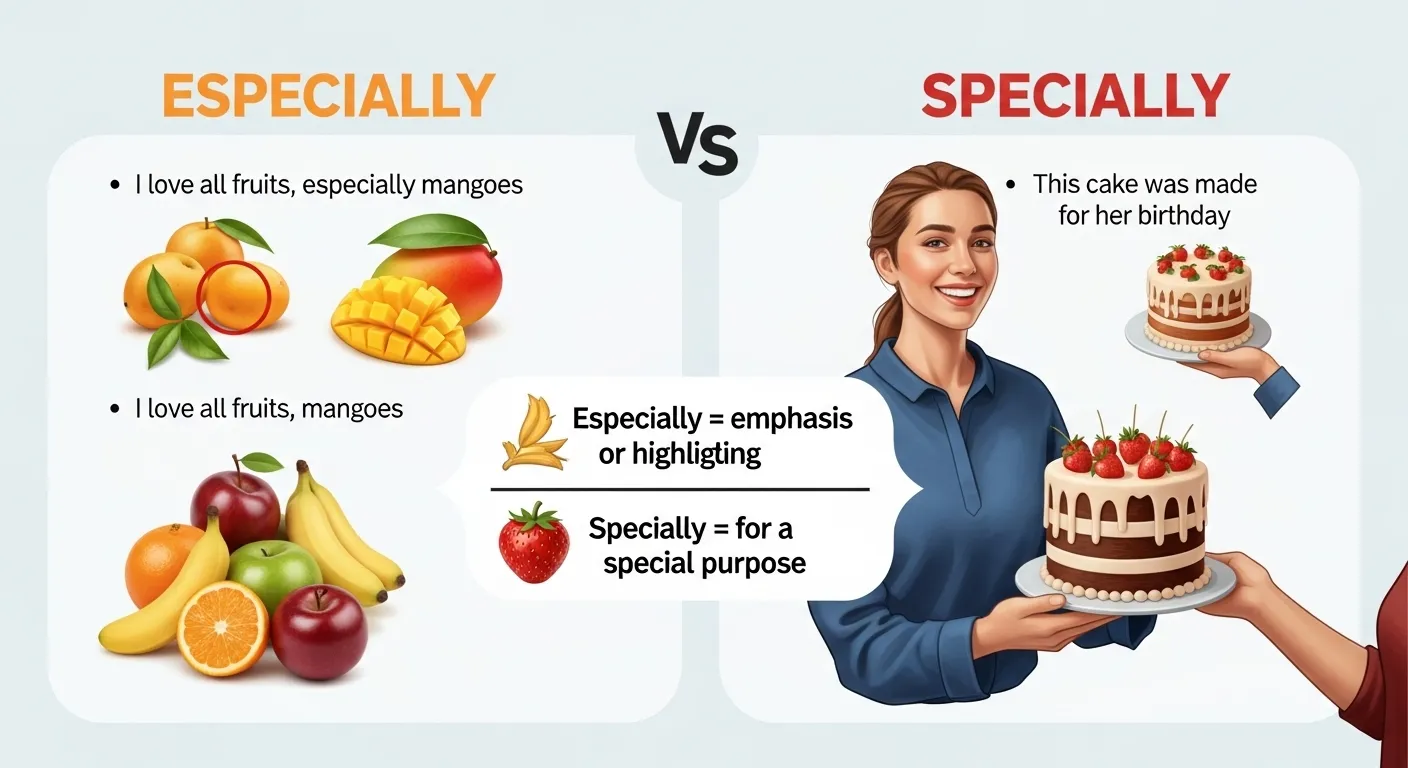
- Especially → Focuses on degree or emphasis. It highlights that something stands out among others.
Example: I love all fruits, but I especially like mangoes. - Specially → Focuses on purpose or intention. It highlights that something was done for a specific reason.
Example: This gift was specially chosen for her birthday.
✅ Quick Tip: Use especially to highlight importance or preference. Use specially when emphasizing purpose, design, or intent.
The Origin of Especially and Specially
Both words stem from the Latin word “specialis”, meaning “particular” or “specific.” Over time, English developed two forms:
- Especially – First recorded in the 15th century, often used to indicate exception or prominence.
- Specially – Recorded in the 16th century, used to indicate purpose or design.
The distinction became clearer over centuries, though in modern English, they sometimes overlap. Understanding their roots helps explain why especially leans toward emphasis, while specially leans toward intention.
British English vs American English Spelling
Both words are spelled the same in British and American English. However, their usage can vary slightly.
| Word | British English Usage | American English Usage |
| Especially | Emphasis in writing and speech | Emphasis; more common than “specially” |
| Specially | Purpose-focused; formal contexts often | Purpose-focused; slightly less common |
💡 Note: American English tends to favor especially in casual writing, while British English uses specially more often when referring to intent or design.
Read More eg or ie: What’s the Difference, Meaning, and Correct Usage Guide
Which Spelling Should You Use?
- United States: Prefer especially for most contexts, use specially for formal or intentional purpose.
- United Kingdom & Commonwealth countries: Both are correct, but specially is common for purpose-driven actions.
- Global Audience: When unsure, use especially for emphasis. Use specially only when pointing out purpose.
Example:
- US: This feature is especially useful for beginners.
- UK: This software was specially designed for students.
Common Mistakes with Especially and Specially
Many writers make errors by mixing the two words.
- ❌ This is specially important. → Correct: This is especially important.
- ❌ He bought this especially for me. → Correct: He bought this specially for me.
- ❌ I especially baked this cake for you. → Correct: I specially baked this cake for you.
Tip: Ask yourself: Are you emphasizing degree (especially) or showing purpose (specially)?
Especially or Specially in Everyday Examples
Emails:
- Especially: I enjoyed your presentation, especially the examples you used.
- Specially: This document was specially prepared for the client meeting.
News Articles:
- Especially: The park is beautiful, especially during spring.
- Specially: The exhibition was specially curated to highlight local artists.
Social Media:
- Especially: I love summer, especially beach days!
- Specially: This filter was specially created for our followers.
Formal Writing:
- Especially: The committee appreciated her contributions, especially in research.
- Specially: The rules were specially designed to ensure fairness.
Especially or Specially – Comparison Table
| Feature | Especially | Specially |
| Focus | Emphasis / degree | Purpose / intention |
| Examples | I especially like chocolate. | This tool was specially made. |
| Common Errors | Using for purpose incorrectly | Using for emphasis incorrectly |
| Usage Preference | US, informal & formal | UK, formal & intentional |
Especially or Specially – Google Trends & Usage Data
Google Trends shows that especially is significantly more popular worldwide, especially in the United States and India. Specially is searched mostly in the UK, Australia, and formal writing contexts.
Observation:
- US: 70% searches use especially
- UK & Australia: 40% use specially, often in design or purpose-based writing
💡 Key Insight: If your goal is broad global readership, especially is safer unless emphasizing purpose.
FAQs About Especially or Specially
1. Can I use especially and specially interchangeably?
- Sometimes, but only if context allows. Generally, use especially for emphasis and specially for purpose.
2. Is especially more common than specially?
- Yes, globally and especially in the US, especially is far more frequent.
3. Which is more formal?
- Specially is slightly more formal when indicating purpose.
4. Can I say “specially important”?
- ❌ No. Use especially important for degree or significance.
5. Are there any regional differences?
- Yes. US favors especially, UK favors specially in some formal contexts.
6. Can I use especially in business emails?
- ✅ Yes. “This report is especially relevant for your department.”
7. Should I memorize usage rules?
- Simple rule: emphasis = especially, purpose = specially. It’s easier to remember.
Conclusion
Choosing between especially and specially doesn’t have to be confusing. Remember the simple rule:
- Especially → for emphasis, highlighting importance or degree.
- Specially → for purpose, intention, or design.
Global usage shows especially dominates casual and professional writing, while specially is favored in formal or design-related contexts, especially in the UK and Commonwealth countries.
Always consider your audience and the purpose of your sentence. When in doubt, ask: Am I emphasizing importance or indicating purpose? That question will guide you to the correct choice every time.
By mastering these two words, your writing becomes precise, professional, and easily understood, whether you’re sending emails, writing articles, or posting on social media.

Sarah Hall is an English novelist and short story writer. She often writes about nature, identity, and strong characters.