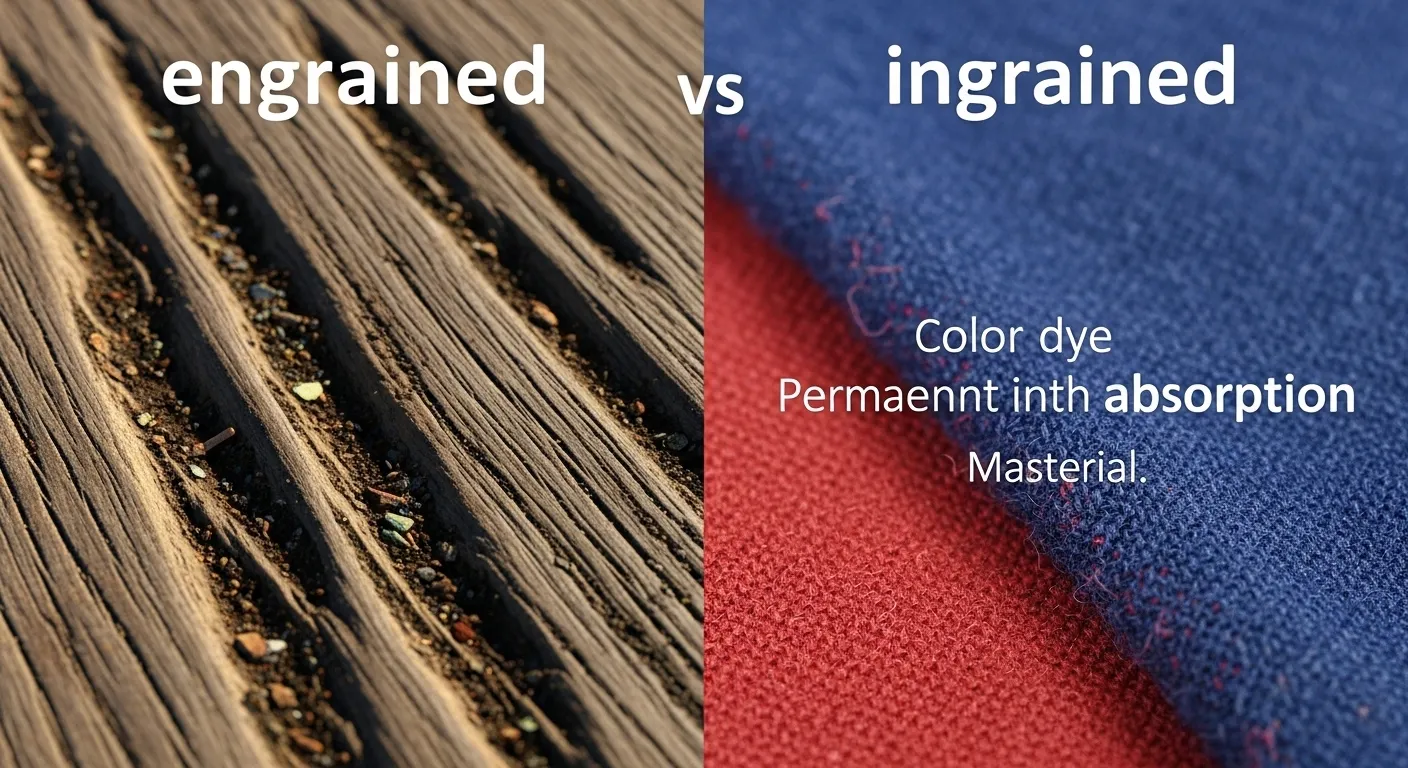
Are you confused between engrained and ingrained? You’re not alone. Many people struggle with this pair because both seem correct and are often used interchangeably.
Knowing the difference can improve your writing, help you avoid embarrassing mistakes, and make your communication more professional.
People search for this keyword because they encounter phrases like “deeply ingrained habits” or “engrained beliefs” in articles, emails, or books, and they wonder which spelling is acceptable.
The confusion is understandable English has many words that sound the same but are spelled differently, often due to historical shifts or regional preferences.
In this article, we’ll provide a quick answer, explore the origin of the words, explain British vs American spelling rules, advise on which spelling to use, and give everyday examples.
You’ll also find common mistakes to avoid, usage trends, and a helpful comparison table to make it crystal clear. By the end, you’ll confidently know how to use the right term in any context.
Engrained or Ingrained – Quick Answer
The correct and widely accepted spelling is ingrained.
- ✅ Example: Her love of reading is deeply ingrained.
- ❌ Example: Her love of reading is deeply engrained.
While engrained appears occasionally in older texts, modern English dictionaries, including Merriam-Webster and Oxford, list ingrained as the standard spelling. It means something firmly fixed, deeply rooted, or established, especially habits, beliefs, or traits.
The Origin of Engrained/Ingrained
The word ingrained comes from the verb ingrain, which literally meant “to dye fabric with grain colors” in Middle English. Over time, its meaning shifted metaphorically to describe something deeply fixed or permanent.
- Ingrain → From Old French engrener, meaning “to impress or fix in.”
- Engrained → Historical variant spelling influenced by “en-” prefixes in Middle English, but now mostly considered obsolete.
Essentially, ingrained is the modern and correct form, while engrained is a historical or less common variant.
British English vs American English Spelling
Both British and American English use ingrained, not engrained. There is no regional difference for this word today; dictionaries in the UK, US, and Commonwealth countries confirm this.
| Feature | Ingrained | Engrained |
| Correct modern usage | ✅ Yes | ❌ No / Rare |
| British English | ✅ Standard | ❌ Obsolete |
| American English | ✅ Standard | ❌ Obsolete |
| Common contexts | Habits, beliefs | Older literature |
| Dictionary reference | Oxford, Merriam-Webster | Historical only |
Tip: Forget “engrained.” If in doubt, always use ingrained.
Which Spelling Should You Use?
- US audience: Use ingrained. It’s the standard form in modern American English.
- UK & Commonwealth audience: Use ingrained. Dictionaries like Collins and Oxford agree.
- Global audience / formal writing: Always choose ingrained to maintain correctness and clarity.
Using engrained in professional emails, academic writing, or news articles may appear as a typo to most readers.
Read More Fueled or Fuelled: Which Spelling Is Correct and When to Use It
Common Mistakes with Engrained/Ingrained
Even experienced writers sometimes make these errors:
- Using “engrained” instead of “ingrained.”
- ❌ Her fear of public speaking is engrained.
- ✅ Her fear of public speaking is ingrained.
- Misplacing the word in sentences
- ❌ He is ingrained late to every meeting.
- ✅ Punctuality is ingrained in his habits.
- Confusing with similar words
- “Engrain” as a verb still exists but is mostly historical. Modern usage favors ingrain.
- Incorrect pluralization
- ❌ These are all ingrains.
- ✅ These habits are ingrained.
- Wrongly associating it with “engrave”
- ❌ The memories were engraved in her mind.
- ✅ The memories were ingrained in her mind.
Engrained/Ingrained in Everyday Examples
Emails / Workplace:
- ✅ Teamwork is ingrained in our company culture.
Social Media / Informal Writing:
- ✅ Good habits are ingrained over time.
News / Journalism:
- ✅ The idea of equality is deeply ingrained in the constitution.
Academic / Formal Writing:
- ✅ Patriotic values were ingrained in the population through education.
Notice how engrained rarely appears in modern writing and may be flagged as incorrect by spellcheckers.
Engrained or Ingrained – Google Trends & Usage Data
Search data shows ingrained vastly outnumbers engrained:
- Ingrained: Popular in the US, UK, Canada, Australia.
- Engrained: Appears mainly in historical literature or non-standard texts.
Google Trends Comparison:
| Keyword | Search Volume (Global) | Trend Notes |
| ingrained | High | Consistent, professional use |
| engrained | Very Low | Rare, historical or obsolete |
Clearly, ingrained is the spelling that aligns with contemporary usage, professional communication, and search intent.
Keyword Variations Comparison Table
| Variation | Correct Modern Usage | Example Sentence |
| ingrained | ✅ Yes | Her habits are deeply ingrained. |
| engrained | ❌ Rare/Obsolete | Older texts may use engrained. |
| in-grained | ❌ Not recommended | Avoid hyphenation in modern writing. |
| ingraining | ✅ Verb form | Parents are ingraining good values. |
FAQs
1. Is “engrained” wrong?
- Not technically wrong historically, but modern usage favors ingrained exclusively.
2. Can “ingrained” be used for habits and beliefs only?
- Mostly yes, but it can also describe feelings, attitudes, or traits firmly established.
3. Which is British English: engrained or ingrained?
- Ingrained. “Engrained” is outdated in all English varieties.
4. Can I use “engrained” in casual writing?
- You might, but readers may consider it a typo. Stick to ingrained.
5. Is there a verb form?
- Yes, ingrain. Example: Good manners are ingrained from childhood.
6. How do I remember which is correct?
- Think of “in” as something inside or deeply fixed → ingrained.
7. Does spellcheck correct “engrained”?
- Most modern spellcheckers will flag it as an error and suggest ingrained.
Conclusion
The choice is simple: use ingrained, not engrained. While engrained exists in older texts, modern English dictionaries, writing guides, and professional usage confirm ingrained as the correct, standard form.
Understanding the origin of the word helps you remember that it refers to something deeply rooted, like habits, beliefs, or traditions. Whether you’re writing emails, academic papers, social media posts, or news articles, sticking with ingrained ensures clarity, professionalism, and correctness.
For global audiences, including the US, UK, Canada, Australia, and beyond, ingrained is the spelling that aligns with standard usage and search behavior. Avoid historical forms like engrained, which may confuse readers or appear outdated.
By following these guidelines, your writing will be precise, credible, and polished. Now, whenever you encounter this word, you can confidently choose ingrained every time.

Andrew Michael Hurley is known for dark and atmospheric fiction. His stories often explore faith, fear, and isolation.