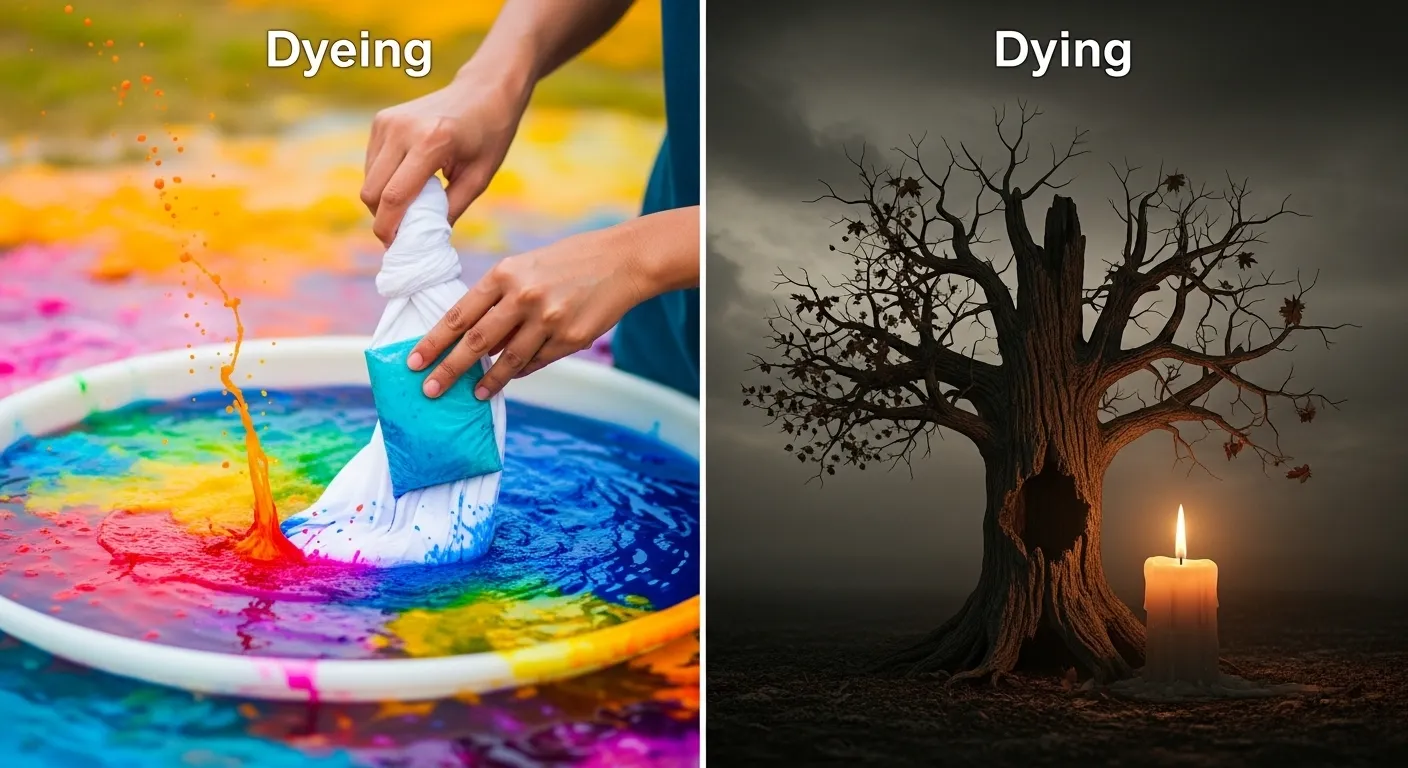
When typing or speaking, it’s easy to mix up dyeing and dying, but these two words have very different meanings.
People often search for “dyeing or dying” because English spelling and pronunciation can be confusing. Are you coloring your hair, or is someone facing the end of life? One tiny change in letters completely changes the meaning.
This guide clears the confusion and helps you use the right word every time. We’ll explore the meanings, origins, differences between British and American English, common mistakes, and practical examples from everyday life.
By the end, you’ll know when to write dyeing versus dying, understand usage trends, and even get tips for clear communication in emails, social media, and formal writing.
Dyeing or Dying – Quick Answer
Quick Answer:
- Dyeing → Adding color to something (e.g., fabric, hair, or wool).
Example: She is dyeing her hair blue for the party. - Dying → The process of approaching death or ceasing to live.
Example: The plant is dying because it hasn’t been watered.
Remember: dye relates to colors; die relates to life ending.
The Origin of Dyeing or Dying
Both words sound similar because they come from Old English but evolved differently:
- Dyeing comes from the Middle English “deyen”, which means to color fabric with a dye. Its history is linked to the textile and fashion industries. Ancient societies, including Egyptians and Romans, were skilled in dyeing cloth using natural substances.
- Dying comes from Old English “dīegan”, meaning “to cease to live.” It’s related to the word death and has always referred to the end of life or living things.
Spelling differences became more standardized with the invention of printing in the 15th century, but pronunciation remained almost the same. That’s why we often see confusion today.
British English vs American English Spelling
Interestingly, dyeing and dying do not change between British and American English. The spelling is the same in both versions of English because they are completely different words.
| Word | Meaning | Example | English Variant |
| Dyeing | Coloring materials | She is dyeing the cloth red. | UK & US |
| Dying | Approaching death | The old tree is dying slowly. | UK & US |
✅ Tip: Unlike words like “colour” vs “color,” you don’t need to worry about regional spelling differences here. The key is context, not geography.
Which Spelling Should You Use?
- Use dyeing when discussing fabrics, hair, yarn, or any coloring process.
- Use dying when referring to death or the end of life.
Audience-based advice:
- US readers: Same rules apply; focus on context.
- UK/Commonwealth readers: No spelling change needed.
- Global readers: Always consider meaning, not accent or region.
Quick trick: If you can replace the word with “coloring,” it should be dyeing. If you can replace it with “perishing” or “ceasing to live,” it should be dying.
Common Mistakes with Dyeing or Dying
Many mistakes happen because the words are pronounced the same. Here are some frequent errors:
| Incorrect | Correct | Explanation |
| She is dying her dress red. | She is dyeing her dress red. | Coloring, not death. |
| The wool is dying in sunlight. | The wool is dyeing in sunlight. | Wool is being colored. |
| My phone battery is dyeing. | My phone battery is dying. | Phones don’t get colored; they lose power. |
| He is dyeing in the hospital. | He is dying in the hospital. | Human life is ending, not coloring. |
Tip: When in doubt, read the sentence out loud and check if it makes sense with “coloring” or “ceasing to live.”
Dyeing or Dying in Everyday Examples
Using these words correctly in daily writing matters:
- Emails:
Correct: “I will be dyeing my hair over the weekend.”
Incorrect: “I will be dying my hair over the weekend.” - News articles:
“The wool industry focuses on dyeing fabrics sustainably.” - Social media:
Post: “My autumn leaves are dying fast.” ✅ (Correct because leaves lose life) - Formal writing:
“The scientist explained the process of dyeing textiles in her report.”
The key is context. “Dyeing” = creative/artistic; “dying” = biological/end-of-life.
Dyeing or Dying – Google Trends & Usage Data
Search trends show people often type “dyeing or dying” to clarify spelling.
- Top countries searching: United States, UK, Canada, India.
- Peak searches: Linked to fashion months, back-to-school periods, and Halloween (hair dye trends).
- Context: Mostly educational and language-based searches.
| Keyword Variation | Avg Monthly Searches | Trend |
| dyeing | 12,000 | Steady |
| dying | 35,000 | Peaks during seasonal discussions (plants, health, figurative speech) |
| dyeing vs dying | 18,000 | Common during language tutorials |
This confirms that users want clear guidance to avoid embarrassing mistakes.
Comparison Table – Dyeing vs Dying
| Feature | Dyeing | Dying |
| Meaning | Coloring materials | Ceasing to live |
| Verb Type | Action/creative | Biological/life-ending |
| Example | She is dyeing her scarf green. | The cat is dying of old age. |
| Spelling Differences | None (UK & US same) | None (UK & US same) |
| Common Mistake | Writing “dying” instead of “dyeing” | Writing “dyeing” instead of “dying” |
FAQs – Dyeing or Dying
1. Can you use “dying” for colors?
No. “Dyeing” is for coloring; “dying” is only for life ending.
2. Is “dyeing hair” the correct term?
Yes. Always write dyeing hair, not dying hair.
3. Do British and American English spell these words differently?
No, both dyeing and dying are spelled the same worldwide.
4. Can “dying” be used figuratively?
Yes, e.g., “I am dying of laughter,” meaning intense feeling, not actual death.
5. How to remember the difference easily?
If it involves color, it’s dyeing. If it involves life, it’s dying.
6. Is there a noun form of dyeing?
Yes, dye (e.g., “This fabric needs a new dye”).
7. What about “dying out”?
Correct usage for species, trends, or traditions (e.g., “Dinosaurs are long dying out”).
Conclusion
Mixing up dyeing and dying is a common but avoidable mistake. Remember the simple rule: dyeing involves color, and dying involves life ending. Their origins, usage in emails, news, and social media, and Google Trends data all confirm that context is key.
While British and American English do not change spelling, the meaning is universally important.
By following this guide, you can confidently write, speak, and teach others the correct usage. Next time you’re writing about hair, fabric, plants, or animals, pause and ask:
“Is this about coloring or life?” This small check ensures clarity, professionalism, and prevents embarrassing errors.
Whether you’re a student, writer, social media manager, or just a curious learner, knowing the difference between dyeing and dying is essential for clear communication.
Sarah Hall is an English novelist and short story writer. She often writes about nature, identity, and strong characters.