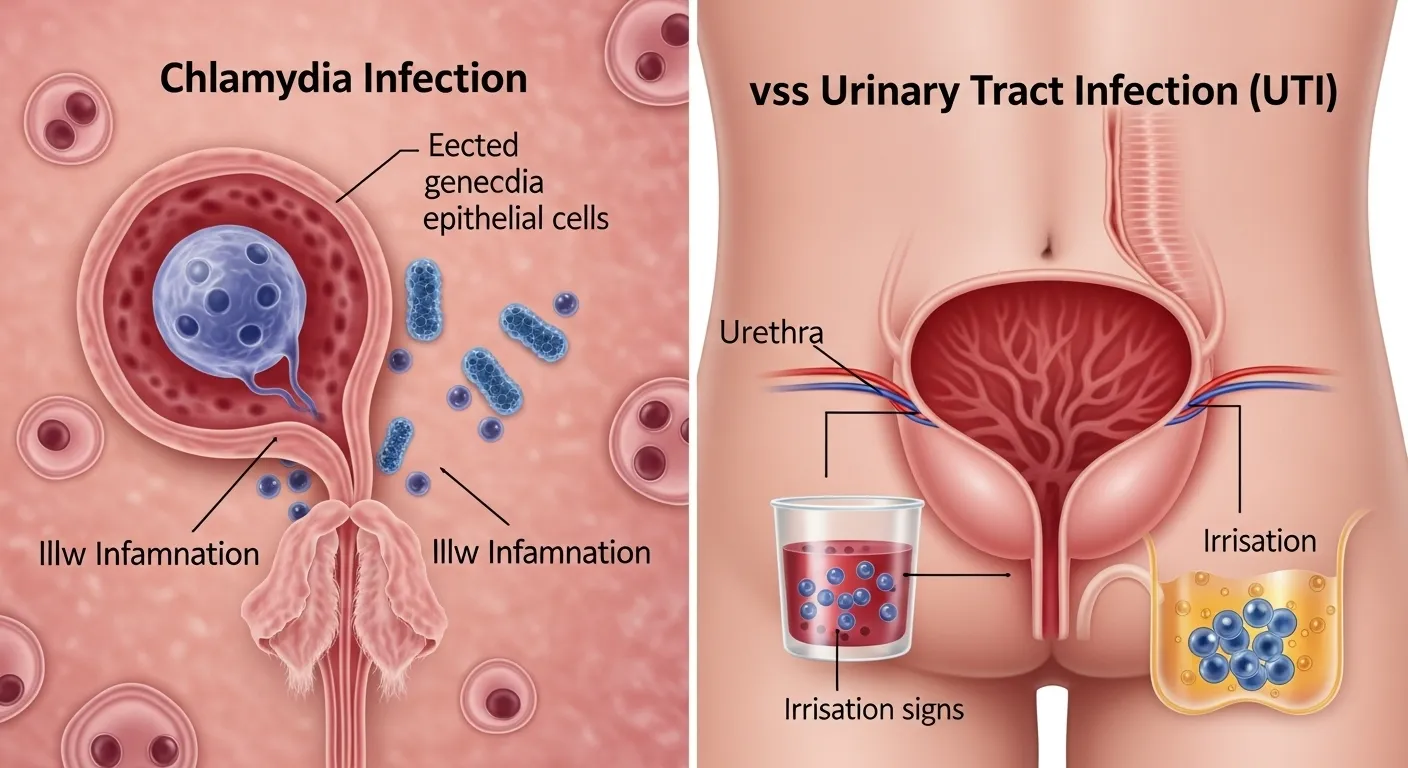
When it comes to urinary and sexual health, many people get confused between chlamydia and a urinary tract infection (UTI). Both can cause discomfort while urinating, but they are very different conditions.
Understanding the difference is crucial because the treatments, risks, and long-term effects vary significantly.
People often search for “chlamydia or UTI” when they experience burning during urination, frequent urges to pee, or unusual discharge. These symptoms overlap, causing worry and confusion.
Knowing whether you might have a sexually transmitted infection (STI) like chlamydia or a simple bacterial infection like a UTI can save time, prevent complications, and ensure proper treatment.
This guide will provide a clear, easy-to-understand comparison, helping you identify symptoms, origins, and the correct approach to treatment.
Chlamydia or UTI – Quick Answer
Chlamydia is a sexually transmitted infection caused by the bacterium Chlamydia trachomatis. It often presents with mild or no symptoms, but can include painful urination, discharge, and pelvic pain. If untreated, it can lead to serious complications like infertility.
UTI (Urinary Tract Infection) is a bacterial infection in the urinary system, usually caused by E. coli. Common symptoms include burning urination, frequent urination, cloudy urine, and lower abdominal discomfort. UTIs are more common in women and usually clear up quickly with antibiotics.
| Feature | Chlamydia | UTI |
| Cause | Sexually transmitted bacterium | Bacteria from urinary tract |
| Symptoms | Mild burning, discharge, pelvic pain | Burning urination, frequent urination, cloudy urine |
| Treatment | Antibiotics (azithromycin/doxycycline) | Antibiotics (varies) |
| Long-term risk | Infertility, pelvic inflammatory disease | Usually low if treated promptly |
| Transmission | Sexual contact | Not sexually transmitted |
The Origin of Chlamydia and UTI
The word chlamydia comes from the Greek word chlamys, meaning “cloak,” referring to the bacterium’s ability to hide inside cells. Discovered in the early 20th century, it became recognized as a major STI in the 1980s.
UTI, or urinary tract infection, is a simple descriptive term. “Urinary” refers to urine, and “tract” refers to the kidneys, bladder, ureters, and urethra. UTIs have been documented since ancient times, with herbal remedies often used before modern antibiotics.
The confusion often arises because both chlamydia and UTIs affect the urinary system and share symptoms like painful urination.
British English vs American English Spelling
While chlamydia and UTI are universally spelled the same way, some medical terms differ between British and American English. Here’s a quick comparison of related terms:
| Term | British English | American English |
| Gynaecology | Gynaecology | Gynecology |
| Haematuria | Haematuria | Hematuria |
| Paediatric | Paediatric | Pediatric |
| Oestrogen | Oestrogen | Estrogen |
For “chlamydia or UTI”, there’s no difference in spelling, so it’s safe to use globally.
Which Spelling Should You Use?
Since both terms are the same worldwide, your choice depends on surrounding medical terminology:
- Use British English if your audience is UK or Commonwealth-based.
- Use American English if your audience is US-based.
- Otherwise, focus on clarity and simplicity rather than spelling differences.
Consistency is more important than regional differences.
Read Also.Psychologist or Therapist – Which One Should You Choose?
Common Mistakes with Chlamydia or UTI
- Assuming all urinary pain is a UTI: Many people self-diagnose a UTI when it could be chlamydia or another STI.
- Ignoring mild symptoms: Chlamydia often shows no or mild symptoms but can cause severe long-term complications.
- Not completing antibiotics: Both conditions require finishing prescribed antibiotics to fully clear the infection.
- Relying on home remedies alone: UTIs may temporarily improve with hydration, but antibiotics are necessary.
- Mixing terminology: Saying “chlamydia infection” versus “UTI” incorrectly can confuse healthcare providers.
Chlamydia or UTI in Everyday Examples
- Emails:
“I’m experiencing burning urination; should I book a test for chlamydia or UTI?” - News Articles:
“Rising STI rates make it essential to distinguish between chlamydia or UTI in young adults.” - Social Media:
“Hey everyone, quick question: chlamydia or UTI? Painful peeing but no discharge.” - Formal Writing:
“Differentiating between chlamydia or UTI is critical for effective treatment and public health reporting.”
Chlamydia or UTI – Google Trends & Usage Data
Search interest for “chlamydia or UTI” is higher in countries with greater public awareness of sexual health, such as the US, UK, Canada, and Australia. Searches peak among young adults aged 18–35, especially after health campaigns or STI awareness months.
| Country | Interest Level (0–100) |
| United States | 85 |
| United Kingdom | 70 |
| Canada | 65 |
| Australia | 60 |
The data shows that confusion between these conditions is common globally, emphasizing the need for clear information and professional advice.
Comparison Table – Symptoms and Treatments Side by Side
| Feature | Chlamydia | UTI |
| Urinary burning | Sometimes mild to moderate | Usually moderate to severe |
| Urgency to urinate | Sometimes | Frequent |
| Discharge | Possible (clear or cloudy) | Rare |
| Fever | Rare | Sometimes |
| Risk of infertility | High if untreated | Low |
| Treatment | Antibiotics (7–14 days) | Antibiotics (3–10 days) |
| Transmission | Sexual | Not sexual |
FAQs
1. Can chlamydia feel like a UTI?
Yes, both can cause painful urination. Testing is required to differentiate.
2. How long does it take to recover from chlamydia or UTI?
UTIs often clear in 3–7 days with antibiotics. Chlamydia may take 1–2 weeks after treatment.
3. Can men get chlamydia or UTI?
Yes. UTIs are less common in men, but chlamydia can affect both genders.
4. Is it safe to have sex with a UTI?
It’s not recommended; sex can worsen irritation and delay recovery.
5. Can chlamydia go away on its own?
No. Untreated chlamydia can cause serious complications. Medical treatment is necessary.
6. How can I prevent both conditions?
Practice safe sex, stay hydrated, and maintain good urinary hygiene.
7. Should I see a doctor for mild symptoms?
Yes. Early diagnosis ensures proper treatment and prevents complications.
Conclusion
Understanding the difference between chlamydia and UTI is vital for sexual and urinary health. While both can cause discomfort during urination, their causes, risks, and treatments are very different.
Chlamydia is a sexually transmitted infection that can be asymptomatic but serious if untreated, whereas a UTI is usually a bacterial infection that responds quickly to antibiotics.
Pay attention to symptoms, avoid self-diagnosing, and consult a healthcare professional if you suspect either condition. Early testing and treatment not only prevent complications but also protect partners and overall health.
Remember, using clear terminology like “chlamydia or UTI” helps communicate symptoms effectively with doctors and ensures accurate treatment.
With this knowledge, you can confidently identify, treat, and prevent these common infections, keeping your urinary and reproductive health in check.

Claire Keegan an Irish author famous for powerful short stories. She writes in a clear and emotional style.