Have you ever typed calender into Google, only to wonder if it should be calendar instead? You’re not alone. This is a very common spelling confusion, especially for students,
office workers, bloggers, and anyone who writes emails or documents regularly. Both words look almost identical, sound the same, and are often used in similar contexts—yet they do not mean the same thing.
People usually search for “calender or calendar” because they want a quick answer: Which one is correct? The confusion grows because spellcheck tools sometimes don’t clearly explain the difference,
and in spoken English, you can’t hear any distinction at all. Add British vs American English into the mix, and things feel even more confusing.
This article solves that confusion once and for all. You’ll learn the correct spelling, the real meaning of each word, their origins, and how to use them properly in everyday writing.
By the end, you’ll know exactly which word to choose—whether you’re writing a professional email, a blog post, or a formal document.
Calender or Calendar – Quick Answer
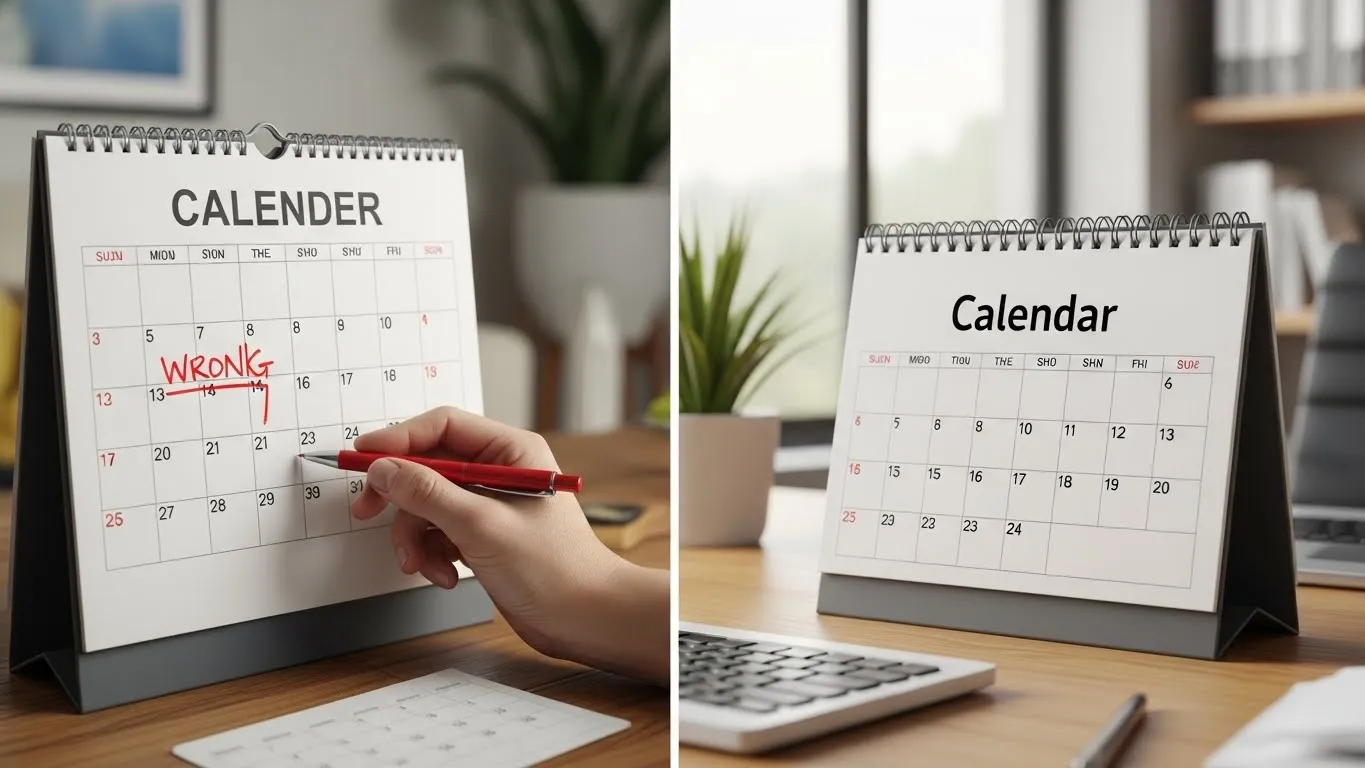
Calendar is the correct word when you mean a system for organizing days, weeks, and months.
Calender is a different word with a technical meaning related to pressing or smoothing fabric or paper.
Examples:
- ✅ Please check the meeting date on the calendar.
- ❌ Please check the meeting date on the calender (wrong).
- ✅ The fabric was passed through a calender machine.
👉 In 99% of daily writing, you need “calendar,” not “calender.”
The Origin of Calender or Calendar
The word calendar comes from the Latin word calendae, which referred to the first day of the month in ancient Rome. Over time, this evolved into the idea of tracking days and months.
Calender, on the other hand, comes from a different root. It entered English through French and refers to a machine or process used in textile and paper industries. A calender machine uses rollers to smooth or glaze materials.
Why the spelling confusion exists:
- Both words share similar pronunciation.
- Only one letter (“a” vs “e”) changes the meaning.
- Most people rarely see calender used outside technical fields.
British English vs American English Spelling
Unlike many words (such as colour/color or organise/organize), calendar is spelled the same in both British and American English.
Comparison Table
| English Variant | Correct Spelling | Example |
| British English | Calendar | The school calendar is updated yearly. |
| American English | Calendar | Check the holiday calendar. |
| Technical Term (Global) | Calender | The calender smooths the paper. |
✅ There is no British or American spelling difference for calendar.
Which Spelling Should You Use?
The right spelling depends on what you are talking about, not where you live.
- US Audience: Use calendar for dates, schedules, and events.
- UK & Commonwealth Audience: Still use calendar.
- Global / Online Writing: Always use calendar unless discussing textiles.
- Technical or Industrial Context: Use calender only if referring to machinery or manufacturing processes.
💡 Simple rule:
If it involves dates, months, or planning, choose calendar.
Common Mistakes with Calender or Calendar
Here are the most frequent errors people make:
- ❌ Mark the deadline on the calender.
✅ Mark the deadline on the calendar. - ❌ My phone calender is full.
✅ My phone calendar is full. - ❌ Assuming calender is a British spelling of calendar.
✅ It is not. - ❌ Using calender in blogs, emails, or school work.
✅ Calendar is correct in these cases.
Calender or Calendar in Everyday Examples
Emails
- Please add the meeting to your calendar.
News
- The government released the official election calendar.
Social Media
- New events added to our August calendar 📅
Formal Writing
- The academic calendar outlines the semester schedule.
Technical Writing
- The paper passes through a calender for finishing.
Calender or Calendar – Google Trends & Usage Data
Search data shows that “calendar” is vastly more popular worldwide. Most searches for “calender” come from:
- Spelling mistakes
- People double-checking correctness
- ESL (English as a Second Language) learners
Usage by region:
- USA, UK, Canada, Australia: Calendar dominates.
- Industrial & manufacturing contexts: Calender appears, but rarely.
📊 Conclusion from trends:
If you want to match user intent and common usage, calendar is the clear winner.
Read Also.Satin or Silk: What’s the Difference
Comparison Table: Calender vs Calendar
| Feature | Calendar | Calender |
| Meaning | Dates, days, months | Smoothing machine/process |
| Daily use | Very common | Very rare |
| Emails & documents | ✅ Correct | ❌ Incorrect |
| British spelling | Calendar | Calender |
| American spelling | Calendar | Calender |
| Industry-specific | ❌ No | ✅ Yes |
FAQs: Calender or Calendar
1. Is “calender” ever correct?
Yes, but only in textile or paper manufacturing contexts.
2. Is “calender” a British spelling?
No. British English also uses calendar.
3. Which spelling should I use in exams?
Always use calendar unless writing about machinery.
4. Why does spellcheck allow “calender”?
Because it is a real word, just with a different meaning.
5. What spelling should I use on my website?
Use calendar for SEO and user clarity.
6. Can I use “calender” for an app?
No. Apps use calendar.
7. Which word is more common?
Calendar, by a huge margin.
Conclusion
The confusion between calender or calendar is understandable, but the rule is actually very simple. Calendar is the correct and widely accepted spelling when you’re talking about dates,
schedules, events, holidays, or planning. This applies to British English, American English, and global usage. It’s the word you should use in emails, exams, articles, apps, websites, and everyday communication.
Calender, while real, has a narrow and technical meaning related to smoothing materials in industrial processes. Unless you work in textiles, paper manufacturing, or engineering, you’ll almost never need it.
Most of the time, seeing or using calender is simply a spelling mistake.
If your goal is clear communication, professional writing, and strong SEO performance, stick with calendar. Remember: if it shows dates, it’s a calendar. Simple, clear, and correct.

David Szalay a British writer who focuses on modern life and relationships. His stories are simple but deep.