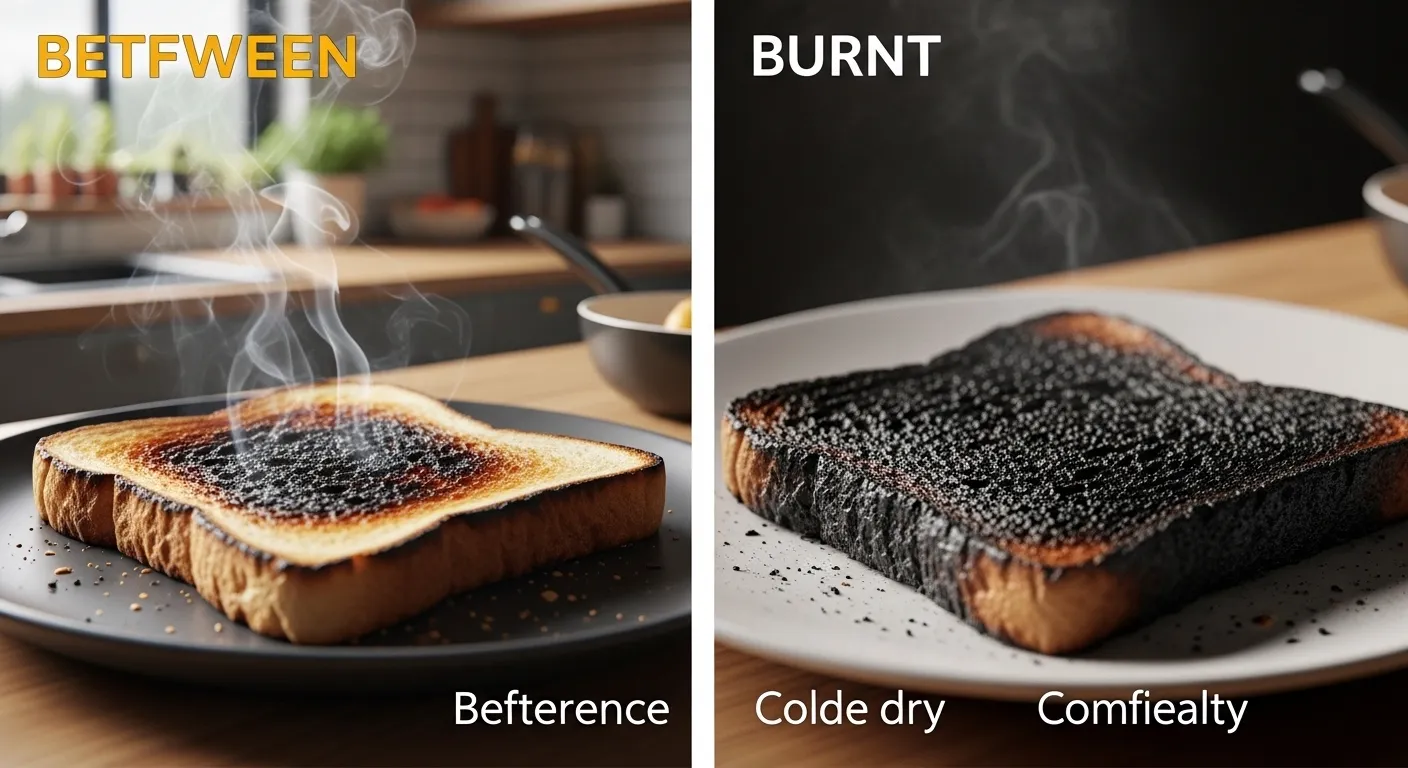
You cook toast and forget it. It turns black. Do you say it “burned” or “burnt”? Both sound right. Both appear in books, news, and emails. This makes many writers confused.
People search for “burned or burnt” because they see both spellings. They want to know which one is correct. They also want to avoid mistakes in school, work, or online writing.
The truth is simple. Both “burned” and “burnt” are correct. But they are used in different places and styles. Some countries prefer one spelling. Some situations sound better with one form.
This guide explains everything in clear words. You will learn the quick answer, history, spelling rules, and examples. You will also see which spelling is best for your audience. By the end, you will feel confident using “burned” or “burnt” in any situation.
Burned or Burnt – Quick Answer
Both “burned” and “burnt” are correct. They are past tense and past participle forms of the verb “burn.”
- Burned is more common in American English.
- Burnt is more common in British English.
Examples:
- American English: I burned the toast.
- British English: I burnt the toast.
Both can also work as adjectives:
- Burned cookies
- Burnt cookies
Quick tip:
If your audience is American, use “burned.” If your audience is British or global, “burnt” is also fine.
The Origin of Burned or Burnt
The word “burn” comes from Old English “bærnan,” which means “to destroy with fire.”
In early English, verbs often had two past forms:
- A regular form ending in “-ed”
- An irregular form ending in “-t”
Over time, both forms stayed in use.
Language experts like the Oxford English Dictionary confirm that both “burned” and “burnt” have existed for centuries.
Later, spelling differences grew between countries. American English moved toward simpler, regular forms. This change was influenced by Noah Webster, who wanted easier spelling.
British English kept many older forms, including “burnt.”
That is why both spellings exist today.
British English vs American English Spelling
The main difference between “burned” and “burnt” depends on location.
- In the United States, “burned” is more common.
- In the United Kingdom, “burnt” is more common.
- In countries like Canada and Australia, both are used.
Comparison Table: British vs American Usage
| Feature | American English | British English |
| Preferred spelling | Burned | Burnt |
| Example sentence | He burned the paper. | He burnt the paper. |
| Formal writing | Burned preferred | Burnt common |
| Everyday speech | Burned common | Burnt common |
| Adjective use | Burned toast | Burnt toast |
Both spellings are correct. The difference is mainly style and location.
Which Spelling Should You Use?
The best spelling depends on your audience.
Use “Burned” if your audience is:
- American readers
- US companies
- American schools
- US blogs and websites
Example:
The factory burned last night.
This spelling follows rules from sources like Merriam-Webster.
Use “Burnt” if your audience is:
- British readers
- UK schools
- Commonwealth countries
- Global audiences
Example:
The forest burnt during the dry season.
Use either spelling if:
- You write casually
- Your audience is mixed
- Your company has no style rule
Consistency matters most. Pick one style and stay with it.
Common Mistakes with Burned or Burnt
Many writers make small errors. Here are the most common ones.
Mistake 1: Thinking one spelling is wrong
Wrong: Burnt is incorrect.
Correct: Both are correct.
Read More.Disk or Disc: Which Spelling Should You Use Today?
Mistake 2: Mixing styles in one document
Wrong:
The toast burned. The bread was burnt.
Correct:
The toast burned. The bread was burned.
OR
The toast burnt. The bread was burnt.
Mistake 3: Using wrong form in formal US writing
Less preferred in US: The building burnt.
Preferred in US: The building burned.
Mistake 4: Thinking burnt is only informal
Wrong: Burnt is slang.
Correct: Burnt is proper British English.
Mistake 5: Forgetting adjective use
Both forms work as adjectives:
- Burned skin
- Burnt skin
Burned or Burnt in Everyday Examples
Here are real-life examples.
Email example
American style:
The document burned in the fire.
British style:
The document burnt in the fire.
News example
American news:
The house burned overnight.
British news:
The house burnt overnight.
Social media example
I burned dinner again.
I burnt dinner again.
Both are correct.
Formal writing example
Scientific report:
The sample burned at high temperature.
British academic report:
The sample burnt at high temperature.
Workplace example
American company:
The machine burned out.
British company:
The machine burnt out.
Burned or Burnt – Google Trends & Usage Data
Data from Google Trends shows clear patterns.
Usage by country
| Country | More popular spelling |
| United States | Burned |
| United Kingdom | Burnt |
| Canada | Both equal |
| Australia | Burnt slightly more |
| India | Burnt more common |
Usage by context
| Context | Common spelling |
| American news | Burned |
| British news | Burnt |
| Scientific writing | Burned |
| Casual speech | Both |
| Global content | Both |
This shows spelling depends on audience and region.
Comparison Table: Burned vs Burnt
| Feature | Burned | Burnt |
| Correct spelling | Yes | Yes |
| Type | Past tense and adjective | Past tense and adjective |
| Common in | American English | British English |
| Formal US writing | Preferred | Less common |
| Formal UK writing | Acceptable | Preferred |
| Casual writing | Common | Common |
| Meaning | Same meaning | Same meaning |
There is no meaning difference.
FAQs About Burned or Burnt
1. Is burned or burnt correct?
Both are correct. Burned is American. Burnt is British.
2. Is burnt wrong in American English?
No. It is correct, but burned is more common.
3. Is burned wrong in British English?
No. Both burned and burnt are correct in British English.
4. Which spelling is more formal?
Burned is more formal in American English. Burnt is formal in British English.
5. Can burnt be used as an adjective?
Yes.
Example:
Burnt toast
Burnt paper
6. Why are there two spellings?
English keeps both regular (-ed) and irregular (-t) forms from history.
7. Which spelling should global writers use?
Both are correct. Burned is safer for global business writing.
Conclusion
The confusion between burned and burnt is common, but the answer is simple. Both spellings are correct. They mean the same thing. The difference comes from location and style.
American English prefers burned. British English prefers burnt. Countries like Canada and Australia use both. Neither spelling is wrong. The most important thing is knowing your audience.
If you write for American readers, use burned. If you write for British or global readers, burnt works well too. In casual writing, both are acceptable.
History explains why both exist. English kept regular and irregular forms over time. Language experts and dictionaries accept both spellings today.
To avoid mistakes, stay consistent. Do not mix both spellings in one document. Choose one style and use it everywhere.
Now you can use burned or burnt with confidence. Your writing will look correct, clear, and professional.

Claire Keegan an Irish author famous for powerful short stories. She writes in a clear and emotional style.