Many people search for “ape or monkey” because they look similar and are often confused with each other. In movies, cartoons, zoos, and even school books, these animals are sometimes named the wrong way. People want a quick and clear answer: Is an ape a monkey, or is a monkey an ape?
This confusion matters more than you may think. Students need the right word for exams. Writers want accuracy. Parents want to explain animals correctly to children.
Even journalists and bloggers want to avoid mistakes that can make their content look unprofessional.
The problem is simple: apes and monkeys are both primates, but they are not the same. They have different bodies, behavior, and scientific groups. Yet many people use the words as if they mean the same thing.
This article solves that confusion. You’ll get a quick answer, clear examples, easy tables, and real-world usage. By the end, you’ll know exactly when to say ape and when to say monkey — with confidence.
Ape or Monkey – Quick Answer
Apes and monkeys are not the same.
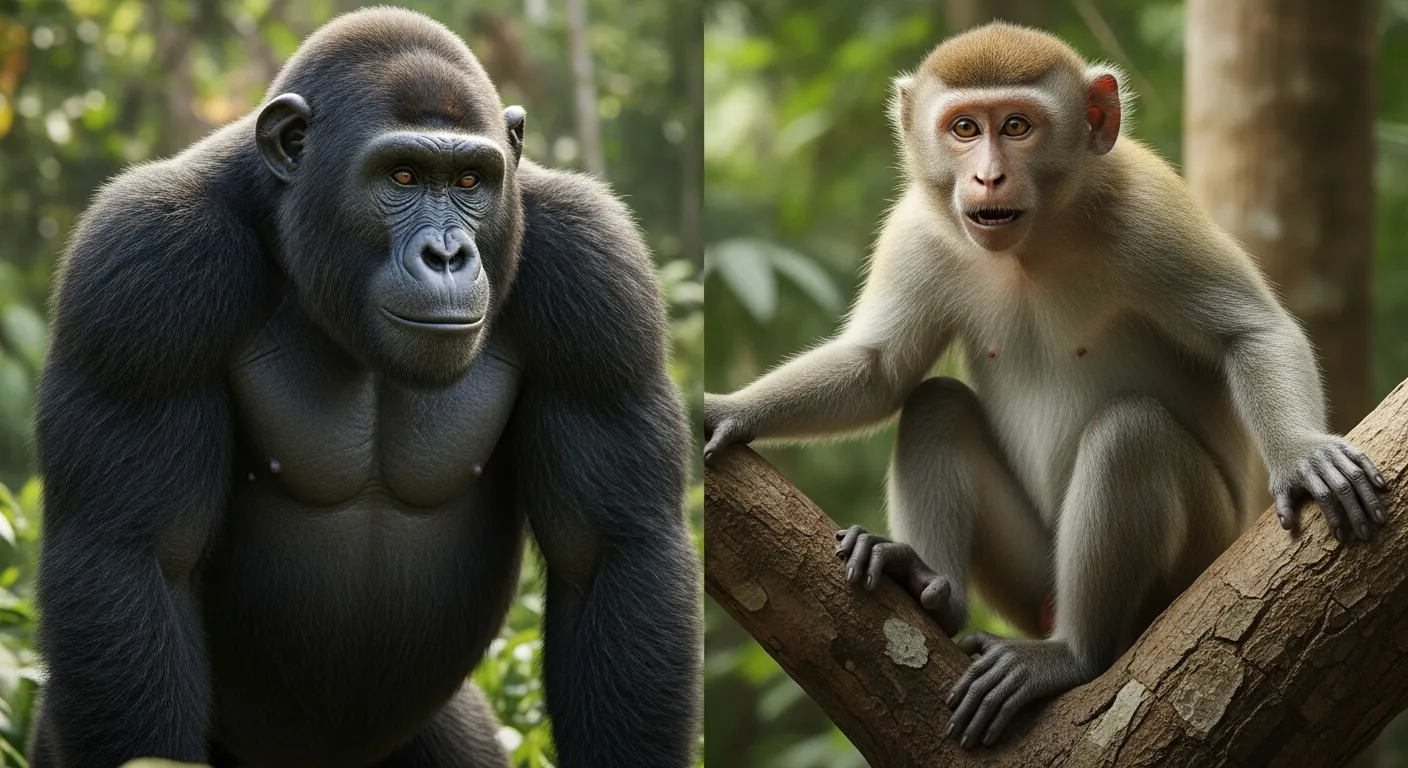
- Apes do not have tails and are usually larger and smarter.
Examples: chimpanzee, gorilla, orangutan, human. - Monkeys usually have tails and are smaller.
Examples: macaque, baboon, capuchin.
👉 Simple rule:
If it has a tail → monkey
If it has no tail → ape
The Origin of “Ape or Monkey”
The word ape comes from Old English apa, meaning a tailless primate. It has been used for centuries to describe animals like gorillas and chimpanzees.
The word monkey comes from Middle English monneke. It became popular later and was used for smaller, tail-bearing primates.
There are no spelling differences here. The confusion exists because both animals look alike and belong to the same primate family. Over time, people began using the words casually, even when they were wrong.
In science, however, the difference is very clear.
British English vs American English Spelling
There is no spelling difference between British and American English for these words.
Both regions use:
- Ape
- Monkey
Spelling Comparison Table
| Word | British English | American English |
| Ape | Ape | Ape |
| Monkey | Monkey | Monkey |
The confusion is biological, not linguistic.
Which Word Should You Use?
Choose the word based on the animal, not your audience.
- For US audiences: Use the correct biological term.
- For UK/Commonwealth audiences: Same rule applies.
- For global readers: Keep it simple and accurate.
👉 If accuracy matters (education, news, SEO):
- Gorilla = ape
- Chimpanzee = ape
- Baboon = monkey
- Macaque = monkey
Common Mistakes with Ape or Monkey
Many people make these errors:
❌ Calling a gorilla a monkey
✅ Gorilla is an ape
❌ Saying monkeys have no tails
✅ Most monkeys do have tails
❌ Thinking apes are a type of monkey
✅ Apes and monkeys are separate groups
❌ Using the words just for fun in serious writing
✅ Use correct terms in education and news
Ape or Monkey in Everyday Examples
Emails
“We saw a monkey at the zoo with a long tail.” ✅
“The chimpanzee was very intelligent.” (Chimpanzee = ape) ✅
News
“The gorilla enclosure was expanded.” (Correct)
“Scientists studied ape behavior.” (Correct)
Social Media
“Monkeys are so smart!” ❌ (If showing a chimp)
“Apes can use tools.” ✅
Formal Writing
“Apes show advanced social behavior compared to monkeys.” ✅
Ape or Monkey – Google Trends & Usage Data
Search data shows that “ape or monkey” is often searched by:
- Students
- Parents
- Animal lovers
- Content writers
Popular by Country
- US & UK: Educational searches
- India & Pakistan: School and exam-related
- Global: Zoo and wildlife content
“Monkey” is searched more often because it’s used casually. “Ape” is searched more in educational and scientific contexts.
Read Also.Judgments or Judgements: Which Spelling Is Correct?
Ape vs Monkey Comparison Table
| Feature | Ape | Monkey |
| Tail | No | Yes (usually) |
| Size | Larger | Smaller |
| Intelligence | Higher | Lower |
| Examples | Gorilla, Chimpanzee | Baboon, Macaque |
| Body Shape | Upright posture | Leaning posture |
FAQs: Ape or Monkey
1. Is a chimpanzee an ape or a monkey?
A chimpanzee is an ape.
2. Do all monkeys have tails?
Most monkeys do, but not all.
3. Are humans apes?
Yes. Humans are classified as great apes.
4. Is a gorilla a monkey?
No. A gorilla is an ape.
5. Why do people confuse apes and monkeys?
They look similar and are often mislabeled in media.
6. Are apes smarter than monkeys?
Yes, apes usually show higher intelligence.
7. Can monkeys walk upright like apes?
Some can briefly, but apes do it more naturally.
Conclusion
The confusion between ape or monkey is common, but the difference is actually simple. Apes do not have tails and are usually larger and smarter. Monkeys usually have tails and are smaller. Both belong to the primate family, but they are not the same.
There is no spelling difference between British and American English. The only thing that matters is using the correct biological term. This is important for education, writing, and clear communication.
If you want to sound accurate and professional, always check the animal first. A chimpanzee, gorilla, or human is an ape. A baboon or macaque is a monkey.
Knowing this small difference can make your writing clearer, smarter, and more trustworthy.

Jon McGregor a British writer known for quiet, realistic stories. His writing focuses on everyday life and human emotions.